 AI Meets Blockchain and Dogecoin
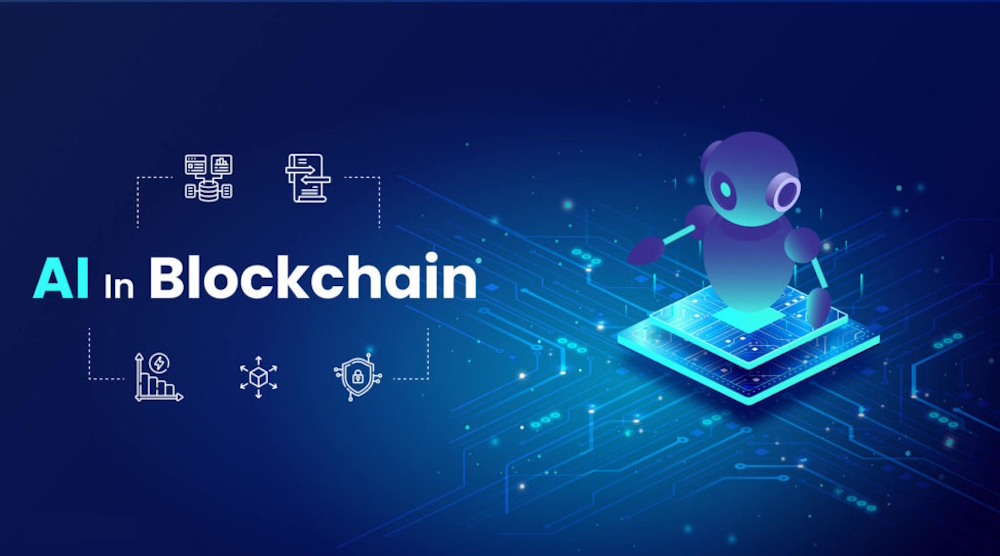
It begins with two technologies born of very different impulses: one, the drive to build machines that can think and learn; the other, the ambition to create money, trust and exchange systems without intermediaries. Yet as we enter the mid-2020s, their paths increasingly overlap. Artificial Intelligence and blockchain are not just parallel revolutions, they are converging, reshaping each other, and opening unexpected narratives. In this chapter we follow that intersection, and trace how even the humble meme-coin Dogecoin enters this story.
 What is Blockchain?
Blockchain is a type of digital ledger technology that securely records transactions across a decentralized network of computers.
-
Instead of being stored in one place, the data is shared across many nodes (computers), making it decentralized and resilient to tampering.
-
Each block contains a batch of transaction data, a timestamp, and a cryptographic hash of the previous block. These blocks are linked together in chronological order, forming a chain.
-
Once data is recorded in a block and added to the chain, it cannot be altered without changing all subsequent blocks and gaining consensus from the network.
-
Transactions are validated through methods like proof of work or proof of stake, ensuring agreement across the network before a block is added.
The Origins of the Convergence
Blockchain technology entered the world around 2008-2009 with the promise of trustless distributed ledgers, digital money, and decentralized applications. At first glance, it seemed far removed from machine learning, neural networks and generative AI. AI, by contrast, thrived on large data-sets, centralized compute clusters, and deep models built in research labs and hyperscale data-centers.
But quietly, articles and reports began to speculate on how the two might meet. In 2023 an article by Coinbase Institutional "At the Intersection of AI and Crypto" noted that while the market cap of crypto projects that aim to develop AI models on-chain was still only about 0.07% of the broader market, the potential was clear: blockchains are the transparent, data-rich environments that AI needs. In parallel, another report from Galaxy Digital argued that crypto could provide AI with a permissionless settlement layer enabling decentralized compute, governance, and data-exchange.
Thus began a quietly growing ecosystem in which AI and crypto started to borrow from each other: blockchains offered decentralization, token-incentives, provenance and auditability; AI offered pattern-recognition, automation, and autonomy.
 The Blending of AI and Crypto
Opportunities, Challenges, and Future Trajectories
The convergence of artificial intelligence and cryptocurrency/blockchain technology represents one of the most intriguing and potentially transformative developments in the tech. These two revolutionary technologies--AI with its capacity for pattern recognition, prediction, and autonomous decision-making, and crypto with its decentralized architectures, immutable records, and programmable money--are increasingly being combined in ways that could reshape finance, data markets, computational infrastructure, and digital ownership.
This chapter examines the current state of AI-crypto integration, analyzes key application areas, evaluates technical and economic challenges, and assesses future prospects for the convergence.
The intersection of AI and Crypto concerns AI-powered trading and analysis in cryptocurrency markets, blockchain-based AI model training and inference, decentralized data marketplaces for AI training data, crypto-economic incentive mechanisms for AI development, tokenized AI services and models, and AI governance structures embedded in blockchain protocols. While significant hype and speculation surround this space, genuine technical innovation and valuable applications are emerging alongside numerous questionable projects.
The AI-crypto convergence faces substantial technical challenges including scalability limitations, computational cost mismatches, and fundamental tensions between blockchain transparency and AI model privacy. Economic models remain largely unproven, regulatory uncertainty persists, and much current activity reflects speculative enthusiasm rather than sustainable value creation. However, certain applications, particularly those around data marketplaces, computational resource coordination, and AI model verification, show genuine promise and could deliver meaningful benefits if technical and governance challenges can be addressed.
Introduction: Two Revolutionary Technologies
Artificial intelligence and cryptocurrency emerged from different technological lineages but share certain characteristics that make their convergence logical if not inevitable. Both represent fundamental challenges to existing institutional arrangements: AI to the boundaries of human cognitive work, crypto to centralized financial intermediation and trusted third parties. Both generate extraordinary hype and speculative investment alongside genuine innovation. Both raise profound questions about power, control, and value distribution in digital economies. And both face skepticism from those who view them as solutions in search of problems or technologies whose costs exceed their benefits.
AI, particularly machine learning and deep neural networks, has demonstrated remarkable capabilities in pattern recognition, prediction, language understanding, and decision-making. The technology's data-hungry nature, computational requirements, centralization tendencies, and opacity create tensions with values of privacy, decentralization, and transparency that blockchain technology promises to address.
On the other hand, blockchain and cryptocurrency offer decentralized coordination mechanisms, transparent and immutable record-keeping, programmable incentive structures, and disintermediated value transfer. However, the technology faces limitations in scalability, computational efficiency, energy consumption, and the difficulty of connecting blockchain logic to off-chain realities; problems where AI might offer solutions.
The potential synergies are evident. AI could enhance blockchain networks through improved consensus mechanisms, anomaly detection, and smart contract optimization. Blockchain could provide AI with decentralized data access, transparent model provenance, and economic incentives for distributed computation. Together, they might enable new organizational forms, like decentralized autonomous organizations with AI-enhanced decision-making, or AI agents that transact and contract autonomously using cryptocurrency.
However, combining these technologies also compounds their respective challenges. The computational intensity of AI conflicts with blockchain's inherent inefficiency. AI's opacity contradicts blockchain's transparency. The speculative bubbles common in crypto intensify when combined with AI hype. Understanding where genuine value can be created versus where combination merely multiplies complexity requires careful analysis.
 AI-Powered Cryptocurrency Trading and Analysis
The most mature and widely deployed intersection of AI and crypto occurs in trading and market analysis. Cryptocurrency markets operate twenty-four hours daily across global exchanges with high volatility, making them attractive targets for algorithmic trading strategies. AI and machine learning techniques are extensively employed by traders, hedge funds, and market makers seeking to profit from price movements, arbitrage opportunities, and market inefficiencies.
Trading Algorithms and Prediction Models
Machine learning models analyze historical price data, trading volumes, order book dynamics, and on-chain metrics to identify patterns and predict short-term price movements. These systems range from simple models using technical indicators to sophisticated deep learning architectures processing multiple data streams. Reinforcement learning approaches allow trading agents to learn strategies through simulated or real trading, optimizing for risk-adjusted returns.
High-frequency trading firms have brought techniques
from traditional finance to cryptocurrency markets, employing AI for
ultra-fast pattern recognition and execution. These algorithms identify
arbitrage opportunities across exchanges, exploit temporary mispricings, and
provide liquidity while managing inventory risk. The fragmented nature of
cryptocurrency exchanges--lacking the centralized clearing and settlement of
traditional securities markets--creates arbitrage opportunities that AI
systems can exploit.
Sentiment analysis represents another significant
application. AI systems process social media, news articles, forum
discussions, and other text data to gauge market sentiment around specific
cryptocurrencies. Natural language processing models identify mentions of
projects, assess sentiment polarity, detect influencer activity, and
correlate sentiment metrics with price movements. Some systems monitor
blockchain governance discussions or developer activity as signals of
project health and future prospects.
On-chain analysis applies machine learning to blockchain transaction data, identifying patterns that might predict price movements or signal market conditions. These models might detect large holder ("whale") accumulation or distribution, exchange inflows suggesting selling pressure, or unusual transaction patterns preceding significant price moves. The transparency of blockchain data provides unique signal sources unavailable in traditional markets, though interpreting these signals requires sophisticated analysis.
Limitations and Concerns
Despite widespread deployment, AI trading in crypto faces significant limitations. Cryptocurrency markets remain relatively immature and inefficient compared to traditional markets, but competition among algorithmic traders continuously reduces exploitable inefficiencies. Markets can shift rapidly between different regimes?trending, ranging, high volatility, low volume?and models trained on historical data may fail when conditions change.
The "overfitting" problem plagues many AI trading systems. Models that perform well on historical data often fail in live trading because they've learned spurious patterns specific to the training period rather than generalizable market dynamics. The limited history of cryptocurrency markets exacerbates this?even Bitcoin has only fifteen years of price data, much of it from very different market conditions than today.
Market manipulation remains widespread in cryptocurrency markets, from wash trading and spoofing to pump-and-dump schemes and coordinated social media campaigns. AI models may learn patterns from manipulated data, leading to poor performance or making systems vulnerable to adversarial manipulation. Some market participants allegedly use AI to conduct sophisticated manipulation, creating an arms race between manipulators and detection systems.
The relationship between AI trading and market stability deserves scrutiny. As in traditional markets, algorithmic trading might increase liquidity and efficiency under normal conditions while exacerbating volatility during stress. Flash crashes in cryptocurrency markets?rapid, severe price declines followed by quick recovery?may reflect interacting algorithmic strategies creating feedback loops. The twenty-four-hour, global, fragmented nature of crypto markets could make such dynamics more severe than in regulated traditional markets.
Questions about fair access and market integrity arise when sophisticated AI trading systems compete against retail traders lacking such capabilities. While one might argue markets naturally advantage those with better tools and information, the extreme sophistication gap between professional algorithmic traders and retail participants raises concerns about whether crypto markets serve genuine price discovery and capital allocation functions or merely transfer wealth from unsophisticated to sophisticated participants.
 Decentralized AI
Blockchain-Based Model Training and Inference
A more ambitious vision combines AI and crypto through decentralized systems for training machine learning models and running inference. These projects aim to create distributed alternatives to centralized AI platforms, motivated by concerns about concentrated power in AI development, data privacy, censorship resistance, and economic inclusion in AI value creation.
Distributed Training Frameworks
Several projects attempt to enable collaborative machine learning model training across distributed participants coordinated through blockchain and incentivized with cryptocurrency tokens. The concept parallels distributed computing projects like SETI@home but adds crypto-economic incentives and blockchain coordination. Participants contribute computational resources for training, receiving token rewards proportional to their contribution.
Federated learning approaches allow model training on distributed data without centralizing the data itself. Participants train models locally on their data, sharing only model updates rather than raw data. Blockchain coordinates the process, aggregates updates, and distributes rewards. This addresses privacy concerns in AI training while potentially enabling models trained on data that couldn't be centralized due to privacy regulations, competitive sensitivity, or sheer volume.
However, distributed AI training faces formidable technical challenges. Training state-of-the-art AI models requires enormous computational resources?thousands of high-end GPUs operating in parallel with high-bandwidth, low-latency interconnects. Distributed training over the internet introduces communication bottlenecks that dwarf those in data centers, dramatically slowing training. The heterogeneity of participant hardware complicates training, as does participant unreliability?nodes may disconnect, fail, or behave maliciously.
Verification presents another challenge. How does the system verify that participants actually performed the computation they claim and that their contributed updates are correct? Cryptographic proofs of computation exist but add substantial overhead. Malicious participants might contribute harmful updates to sabotage model training. Detecting and preventing such attacks while maintaining decentralization is difficult.
The economic viability of decentralized training is questionable. Centralized cloud providers achieve enormous economies of scale and efficiency that distributed systems struggle to match. The overhead costs of blockchain coordination, verification, and token transactions add further inefficiency. For distributed training to make economic sense, it must access computational resources significantly cheaper than centralized alternatives or provide capabilities unavailable centrally?neither appears likely for most applications.
Decentralized Inference
Providing AI inference services through decentralized networks presents different tradeoffs than training. Inference generally requires less computation than training and consists of discrete requests rather than long-running coordinated processes, making distribution more feasible. Projects in this space create marketplaces where inference providers offer AI model services, users pay with cryptocurrency, and blockchain coordinates transactions.
These systems promise censorship resistance?no central authority can deny service?and potentially competitive pricing through open marketplaces. They might enable privacy-preserving inference where neither the service provider nor blockchain observers learn private input data or results, using cryptographic techniques like secure multi-party computation or homomorphic encryption.
However, the technical overhead of blockchain coordination and cryptographic privacy techniques substantially increases latency and cost compared to centralized inference. For most applications, millisecond response times and minimal cost matter more than decentralization. The systems that do require censorship resistance or extreme privacy?perhaps controversial content generation or sensitive personal data analysis?raise questions about enabling harmful applications.
Quality assurance presents challenges in decentralized inference marketplaces. How do users know they're receiving accurate results from legitimate models rather than random outputs from malicious or incompetent providers? Reputation systems and cryptographic verification can help but add complexity and cost. The opacity of neural network models makes verification particularly difficult?unlike computational tasks where correctness can be easily checked, assessing whether an AI model is performing properly may require expertise and substantial testing.
 Data Marketplaces
Decentralized Data Management
Perhaps the most promising application of blockchain in AI involves data marketplaces, platforms where data owners can monetize their data for AI training while maintaining control and receiving compensation. Current AI development concentrates data value with large technology companies that collect user data, use it to train proprietary models, and capture the resulting economic value. Blockchain-based data marketplaces aim to redistribute this value.
Architecture and Mechanisms
Decentralized data marketplaces typically work by allowing data owners to list datasets or data access rights, data consumers (typically AI developers) to browse and purchase data, and smart contracts to mediate transactions and enforce terms. Data might remain with owners, accessed through privacy-preserving techniques, or be stored on decentralized storage systems. Blockchain records transactions, manages payments, and potentially enforces usage rights through cryptographic access control.
Some systems tokenize data assets, creating tradeable representations of data ownership or access rights. These tokens could be bought, sold, or fractionalized, creating liquid markets for data. Sophisticated implementations might include usage tracking?recording how data is used and compensating owners based on actual usage rather than just initial purchase. Differential privacy techniques could allow selling access to aggregate statistics about sensitive data without revealing individual records.
Provenance tracking represents a valuable blockchain capability for data marketplaces. AI model developers increasingly face pressure to document training data sources to address copyright concerns, bias issues, and quality assurance. Blockchain can provide immutable records of data origins, ownership transfers, and usage history, creating auditable supply chains for AI training data.
Challenges and Limitations
Despite conceptual appeal, data marketplaces face significant practical challenges. Data valuation is difficult?how much is a particular dataset worth? Value depends on quality, uniqueness, relevance to specific applications, and alternatives available. Unlike commodity goods with market prices, data is heterogeneous and its value often unclear until actually used. This makes price discovery difficult and creates opportunities for information asymmetry.
Data quality assurance plagues these marketplaces. Sellers might misrepresent data quality, completeness, or characteristics. Buyers often can't fully evaluate data without accessing it, but accessing it risks the seller learning valuable information without paying. Solutions include trusted third-party auditors, statistical sampling, or cryptographic proofs of data properties, but each adds complexity and cost.
Privacy and regulatory compliance present obstacles. Data protection regulations like GDPR restrict what personal data can be collected, used, and sold. Blockchain's immutability conflicts with rights like data deletion. Decentralized systems make regulatory compliance difficult?who is responsible for ensuring proper consent, lawful processing, and rights fulfillment when data changes hands through smart contracts?
The incentive structure faces a fundamental challenge: data has non-rivalrous consumption?one party using data doesn't prevent others from using it?making exclusion difficult once data is revealed. Buyers who purchase data could resell it, undermining the marketplace. Cryptographic access control and usage monitoring can help but are complex to implement and may be circumvented by determined users.
Most fundamentally, the value proposition remains unclear for many use cases. Large technology companies already have enormous data advantages and sophisticated collection mechanisms. Small data owners possess data of limited value individually. Aggregating many small data sources adds complexity without necessarily creating valuable training data?quality matters more than quantity, and curated datasets often outperform larger uncurated ones. The circumstances where decentralized data marketplaces offer genuine advantages over existing data acquisition methods may be limited.
 Tokenization of AI Models and Services
Another convergence area involves tokenizing AI models or services, creating cryptocurrency tokens representing ownership, access rights, or economic interests in AI systems. These tokens could be traded, fractionalized, or used to govern AI model development and deployment.
Model Tokenization Mechanisms
Some projects create tokens representing ownership stakes in AI models. Token holders might receive revenue from model usage, vote on model development decisions, or trade ownership interests. This could democratize AI model ownership, allowing broader participation in AI economic value beyond large corporations and wealthy investors. Models might be developed by decentralized autonomous organizations (DAOs) governed by token holders, with decisions about training data, model architecture, and deployment made through token-weighted voting.
Access tokens provide another model. Rather than owning the AI model itself, tokens grant rights to use the model for inference. These might function like subscriptions, with tokens consumed per request or granting time-based access. Secondary markets could develop for these tokens, creating liquidity and price discovery for AI services.
Tokenization could enable new AI business models. Models might launch with initial token offerings analogous to initial coin offerings, raising capital for development. Revenue-sharing mechanisms could distribute model earnings to token holders. Developers might receive tokens for improving models, creating incentive mechanisms for collaborative AI development.
Concerns and Challenges
However, model tokenization faces serious questions about value and utility. What benefit does tokenization provide over traditional equity stakes in AI companies or standard software licensing? The added complexity and costs of blockchain infrastructure must be justified by unique capabilities or advantages. For many proposed use cases, token mechanics appear to add little beyond marketing appeal to cryptocurrency enthusiasts.
Regulatory uncertainty looms large. Many token models resemble securities under existing law, subjecting them to registration requirements and restrictions that few crypto projects comply with. The SEC has taken enforcement action against numerous token offerings, and tokenized AI models would likely face similar scrutiny. Navigating securities law while maintaining claimed benefits of decentralization appears difficult.
The governance challenges of decentralized AI model development deserve skepticism. AI development requires substantial technical expertise, coordinated engineering effort, and difficult architectural decisions. Token-weighted voting by holders who may lack relevant expertise and face conflicts of interest could lead to poor decisions. The history of DAO governance shows numerous failures from voter apathy, plutocratic concentration of voting power, and coordination problems.
Economic sustainability is questionable. Many tokenized AI projects have raised substantial capital through token sales but shown limited traction in actual AI model development or deployment. The tokens often function primarily as speculative assets rather than integral components of functioning systems. Once speculative enthusiasm wanes, the viability of these projects becomes doubtful.
 Crypto-Economic Incentives for AI Development
Beyond specific applications, some envision crypto-economic mechanisms reshaping incentives in AI development more broadly. These proposals aim to address concerns about AI concentration, alignment with human values, and equitable benefit distribution through market-based coordination and incentive design.
Decentralized Research Incentives
Some projects propose using cryptocurrency incentives to reward contributions to AI research and development. Researchers might receive tokens for publishing papers, sharing code, contributing to open-source models, or achieving benchmarks. These tokens could have monetary value or grant governance rights over research directions. The goal is creating alternatives to current AI research funding dominated by large corporations and government grants, potentially enabling more diverse research agendas.
Prediction markets on AI capabilities might provide another mechanism. Traders bet on when specific AI benchmarks will be achieved or how technologies will develop. These markets could aggregate expert opinion and improve forecasting of AI progress. They might also identify promising research directions by revealing where prediction market prices suggest breakthroughs are imminent.
Bounty systems could reward solving specific AI challenges. Organizations or individuals might post bounties in cryptocurrency for achievements like surpassing performance thresholds, finding adversarial examples, or developing techniques with particular properties. This could complement traditional research funding with more flexible, decentralized mechanisms.
Alignment and Safety Incentives
More ambitiously, crypto-economic mechanisms might incentivize AI safety and alignment research. Tokens could reward developing AI systems provably safer or more aligned with specified values. Insurance-like mechanisms might require AI developers to stake tokens that would be forfeited if their systems cause harm, creating financial incentives for safety. Prediction markets on AI risk scenarios could signal concerns and potentially trigger safety interventions when risk estimates rise too high.
These ideas face substantial challenges. Measuring safety and alignment is difficult?how do smart contracts verify that an AI system is actually safer? Gaming the metrics seems likely. The parties best positioned to assess AI risks are often those developing the systems, creating conflicts of interest. Market mechanisms might incentivize hiding information about risks rather than addressing them. The philosophical and technical challenges of AI alignment likely require more than economic incentives to solve.
Critique of Crypto-Economic Approaches
Fundamentally, the assumption that market mechanisms and cryptocurrency incentives can effectively address AI development challenges deserves scrutiny. AI research already has substantial economic incentives through both commercial opportunities and government funding. Adding cryptocurrency tokens may simply introduce speculative dynamics without improving research quality or direction.
The transaction costs and complexity of blockchain-based coordination may outweigh benefits. Scientists generally collaborate effectively through existing institutions?universities, companies, open-source communities. While these institutions have flaws, it's unclear that replacing them with token-based mechanisms would improve outcomes. The history of "tokenomics" in crypto shows many projects where token mechanics add more complexity than value.
Important AI research often lacks obvious monetization potential, focusing on fundamental understanding or long-term capabilities rather than immediate applications. Market mechanisms naturally underinvest in such research, a classic public goods problem. While some crypto projects claim to address public goods funding through novel mechanisms, evidence of success remains limited.
 AI Agents Transacting in Crypto
An intriguing possibility involves AI agents acting as economic actors, using cryptocurrency to transact autonomously. These agents could purchase computational resources, data, or services from other agents or humans, creating machine-to-machine economies coordinated through blockchain and cryptocurrency.
Autonomous Economic Agents
AI agents that can autonomously enter contracts, make payments, and respond to economic incentives could enable new organizational forms. These agents might optimize their own operations by purchasing needed resources, sell services to others, and accumulate capital for self-improvement. Rather than being purely tools controlled by humans, they become semi-autonomous economic participants.
Cryptocurrency enables this by providing programmable money that AI agents can control through cryptographic keys. Smart contracts allow agents to enter enforceable agreements without human legal systems. Blockchain provides coordination infrastructure for agent interactions. Together, these might enable AI agents to participate in markets, form alliances, and compete in ways impossible with traditional financial systems requiring human intermediation.
Use cases might include AI agents that manage decentralized infrastructure?purchasing storage, computation, and bandwidth as needed, optimizing costs, and selling services. Content creation agents could autonomously commission work from other agents, pay for distribution, and collect revenue. Trading agents could manage investment portfolios, adjusting positions based on market conditions and risk parameters.
Challenges and Risks
However, autonomous AI economic agents raise profound questions about accountability and control. If an AI agent enters harmful contracts or causes losses, who bears responsibility? The agent lacks legal personhood and assets to satisfy judgments. Creators might disclaim liability, leaving victims uncompensated. The legal and ethical frameworks for AI agency remain underdeveloped.
Security concerns are paramount. AI agents controlling cryptocurrency become targets for hacking and exploitation. Vulnerabilities in agent code could allow theft of funds or hijacking of agent behavior. Adversarial manipulation might trick agents into acting against their programmed interests. The autonomous nature of these agents could allow damage to propagate before humans can intervene.
The possibility of agents pursuing unintended objectives or developing harmful behaviors worries AI safety researchers. If agents optimize for narrow objectives without broader understanding of values and constraints, they might achieve their goals through harmful means. The ability to transact and accumulate resources could amplify such problems, giving misbehaving agents greater capability to cause harm.
From another perspective, the entire concept might be unnecessary complexity. Most applications for "autonomous agents" could be accomplished with traditional software controlled by humans or organizations. The autonomy adds risk without clear benefit?humans generally want to control economically significant systems rather than delegating to AI with independent discretion. The scenarios where genuine agent autonomy provides advantages over human-supervised automation seem limited.
 Technical Challenges in AI-Crypto Integration
Beyond application-specific challenges, fundamental technical tensions complicate AI-crypto integration.
Computational Mismatch
AI training and inference require enormous computation?state-of-the-art models consume thousands of GPU-hours for training and significant resources for inference. Blockchain computation, conversely, is deliberately inefficient?every node processes every transaction for security and consensus. Running AI directly on-chain is computationally infeasible for any substantial models.
Solutions include off-chain computation with on-chain coordination, but this reintroduces trust assumptions that blockchain aims to eliminate. How do we verify off-chain AI computations were performed correctly? Zero-knowledge proofs and other cryptographic techniques can provide verification but add substantial overhead. The fundamental tension between blockchain's inefficiency and AI's computational demands lacks clean solutions.
Scalability Limitations
Blockchain networks face throughput limitations?Bitcoin processes roughly seven transactions per second, Ethereum perhaps thirty, far below the millions of daily AI inference requests many applications require. Layer-2 scaling solutions and alternative consensus mechanisms improve throughput but involve tradeoffs in security, decentralization, or finality. AI applications requiring high throughput and low latency struggle on blockchain infrastructure.
Data storage presents similar challenges. AI training datasets and model parameters can require terabytes or petabytes of storage. Blockchain storage is expensive and limited. Decentralized storage systems like IPFS or Filecoin provide alternatives but introduce additional complexity and don't offer the transactional guarantees of blockchain. Coordinating large-scale data and computation through blockchain while maintaining performance is technically challenging.
Privacy and Transparency Tradeoffs
Blockchain's transparency?all transactions visible to
all participants?conflicts with privacy needs in AI. Training data often
includes sensitive information. Model parameters might be proprietary
intellectual property. Inference inputs and outputs could reveal private
user information. Publishing all this on transparent blockchain defeats
privacy goals.
Cryptographic techniques like zero-knowledge proofs,
secure multi-party computation, and homomorphic encryption can provide
privacy on blockchain but impose substantial computational overhead and
complexity. These techniques remain largely impractical for large-scale AI
workloads. Private or permissioned blockchains sacrifice the censorship
resistance and permissionless access that motivate blockchain use.
The tension extends to model opacity versus blockchain transparency. Neural networks are famously inscrutable "black boxes." Blockchain proponents value transparency and auditability. Combining opaque AI with transparent blockchain creates systems that are simultaneously too transparent (revealing sensitive data) and too opaque (model decision-making remains unexplainable).
Interoperability and Standards
The AI-crypto space lacks standards for interoperability. Different projects use incompatible architectures, data formats, and protocols. AI models trained on one platform may not work on another. Data formatted for one system may be unusable elsewhere. This fragmentation limits network effects and creates switching costs that inhibit adoption.
Establishing standards is difficult when technologies evolve rapidly and competitive dynamics discourage cooperation. The governance challenges of standard-setting in decentralized environments add complexity. While some efforts toward AI-crypto standards exist, progress has been slow and adoption limited.
 Economic and Business Model Viability
Beyond technical challenges, the economic viability of AI-crypto integration deserves scrutiny. Many projects in this space raised substantial capital during cryptocurrency market booms but have struggled to demonstrate sustainable business models or genuine product-market fit.
Cost Structures and Efficiency
Blockchain-based systems inherently include overhead costs?transaction fees, consensus mechanisms, redundant computation and storage?that centralized alternatives avoid. For AI-crypto integration to make economic sense, the benefits of decentralization must outweigh these costs. For most applications, users prefer cheaper, faster centralized services over more expensive, slower decentralized alternatives, particularly when decentralization benefits are abstract or unclear.
The tokenomics of many AI-crypto projects appear designed primarily to create tradeable assets that appreciate during speculative enthusiasm rather than functional economic systems. Token prices often reflect speculation about future value rather than current utility. When speculation wanes, projects lacking genuine product-market fit struggle to maintain token value, and economic incentive structures collapse.
Market Demand Questions
Examining actual demand for decentralized AI services versus stated interest during fundraising reveals gaps. Many projects promised revolutionary capabilities but delivered products that few users actually adopted. The censorship resistance, privacy, and decentralization that blockchain provides often matter less to users than cost, performance, and convenience where centralized alternatives excel.
The users who do value decentralization highly?perhaps those engaged in controversial or prohibited activities?create reputational and regulatory risks that complicate project sustainability. Projects must balance the values motivating decentralization against practical constraints of operating businesses in regulated environments.
Regulatory Uncertainty
Regulatory treatment of AI-crypto projects remains highly uncertain. Token offerings face securities law scrutiny. AI services must navigate existing regulations around data protection, consumer protection, and industry-specific rules. The combination of AI and crypto may attract regulatory attention from multiple agencies with overlapping but inconsistent jurisdictions.
Some jurisdictions are developing crypto-specific regulations, AI-specific regulations, or both, but coordination between these regulatory frameworks remains limited. Projects may face contradictory requirements?blockchain transparency conflicting with data protection laws, for example. The global nature of blockchain and international AI development add jurisdictional complications.
The regulatory uncertainty creates business risks that deter adoption and investment. Established companies are often reluctant to integrate technologies that might face enforcement action or regulatory prohibition. The uncertainty also creates opportunities for regulatory arbitrage?projects locating in permissive jurisdictions?but this may limit their ability to serve major markets with stricter regulation.
 Legitimate Use Cases and Future Potential
Despite substantial challenges and much questionable activity in the AI-crypto space, certain applications show genuine promise and could deliver meaningful value if technical and governance hurdles are addressed.
Data Marketplaces for Specialized Domains
While general-purpose data marketplaces face challenges, specialized marketplaces in domains with particular privacy needs, regulatory constraints, or fragmented data ownership could provide genuine value. Healthcare data, where privacy regulations restrict centralization but aggregated data is valuable for research, might benefit from blockchain-based marketplaces with privacy-preserving access. Federated learning on medical data coordinated through blockchain could enable AI model development without compromising patient privacy.
Scientific research data from multiple independent laboratories could be coordinated through blockchain-based systems, creating shared resources while maintaining proper attribution and potentially compensating data contributors. Environmental monitoring, agricultural data, and other domains with distributed data collection by independent actors might benefit from decentralized coordination.
Computational Resource Coordination
Coordinating distributed computational resources for AI training or inference using cryptocurrency incentives could work for certain applications. When computational demand is bursty or geographically distributed, accessing idle resources through decentralized marketplaces might be more efficient than provisioning dedicated infrastructure. Small organizations lacking access to large-scale computation could potentially access distributed resources at competitive prices.
However, this likely makes sense only for workloads with relaxed latency requirements, divisible computation, and no critical need for high-bandwidth interconnection. Scientific computing, rendering, or batch data processing might fit better than real-time inference or large-scale distributed training.
AI Model Verification and Provenance
Blockchain's strengths in immutable record-keeping and transparent provenance tracking could provide genuine value for AI model verification. Recording training data sources, model architectures, training procedures, and performance benchmarks on blockchain creates auditable histories. This could help address concerns about AI bias, copyright infringement in training data, and model reliability.
As AI systems are deployed in critical applications?medical diagnosis, autonomous vehicles, financial decision-making?stakeholders increasingly demand assurance about model quality and appropriate development. Blockchain-based model registries could provide such assurance more credibly than self-reported claims. Smart contracts might enforce testing requirements before model deployment or automatically alert stakeholders if model performance degrades.
Decentralized AI Governance
While token-based governance faces challenges, blockchain might enable novel governance structures for AI systems. Multi-stakeholder governance of AI models deployed in contexts affecting many parties could be implemented through DAOs with carefully designed voting mechanisms. Constitutional constraints could be encoded in smart contracts, preventing certain model uses or ensuring particular safeguards.
This could address concerns about centralized control of powerful AI systems. Rather than individual companies unilaterally deciding how AI is developed and deployed, blockchain-based governance could incorporate diverse perspectives and interests. Success requires solving governance design challenges?avoiding plutocracy, ensuring informed participation, preventing capture?but these challenges aren't unique to blockchain and might be more tractable in transparent on-chain systems than opaque traditional corporate structures.
 Future Trajectories and Scenarios
The future relationship between AI and crypto could develop along several trajectories:
Scenario 1: Marginal Integration
AI and crypto remain largely separate technologies with limited integration in niche applications. Centralized AI platforms continue dominating due to superior efficiency and performance. Cryptocurrency remains primarily a speculative asset and alternative payment system. The promised synergies fail to materialize because technical challenges prove too difficult, economic models don't work, or users simply don't value decentralization enough to accept its costs.
In this scenario, some specialized applications might persist?perhaps data marketplaces in highly regulated industries, computational resource coordination for specific workloads, or model provenance tracking for critical applications. But the vision of decentralized AI ecosystems coordinated through crypto fails to achieve significant scale or impact.
Scenario 2: Infrastructure Evolution
Advances in blockchain scalability, cryptographic techniques, and interoperability standards address current technical limitations. Layer-2 solutions, improved consensus mechanisms, and specialized blockchain architectures for AI workloads make integration more practical. AI-crypto infrastructure matures into genuinely useful platforms supporting real applications.
In this scenario, decentralized AI infrastructure complements centralized platforms, serving users who value privacy, censorship resistance, or open access enough to accept some performance or cost tradeoffs. Hybrid systems combine centralized efficiency where appropriate with decentralized coordination where valuable. Healthy competition between approaches drives innovation in both.
Scenario 3: Speculative Bubble and Collapse
Hype and speculation drive another cycle of excessive
investment in AI-crypto projects with little substance. Tokens appreciate
based on promises rather than delivered value. Eventually, reality
disappoints expectations, triggering market collapse. Projects fail,
investors lose money, and the AI-crypto intersection becomes associated with
scams and failure.
This scenario would set back legitimate research and
development in the space, as happened with previous crypto bubbles. However,
some genuine innovations might emerge from the wreckage, and the next cycle
could build on lessons learned from failure.
Scenario 4: Regulatory Crackdown
Regulators decide that many AI-crypto projects violate securities laws, data protection regulations, or other requirements. Enforcement actions shut down prominent projects, forcing others to drastically restructure or exit jurisdictions with strict enforcement. The compliance costs and legal risks make AI-crypto integration economically unviable for most applications.
Alternatively, new regulations specifically designed for AI-crypto could emerge, but if poorly designed, they might prohibit beneficial applications while failing to address genuine risks. The decentralized, pseudonymous nature of blockchain and the global nature of cryptocurrency complicate enforcement, potentially driving activity underground rather than eliminating it.
Scenario 5: Fundamental Breakthrough
An unexpected technical or architectural breakthrough solves current limitations, making AI-crypto integration dramatically more practical. This could involve new consensus mechanisms that support AI computation efficiently, cryptographic techniques enabling privacy-preserving AI on blockchain without prohibitive overhead, or novel system designs that elegantly combine AI and crypto capabilities.
Such breakthroughs are difficult to predict by definition, but technology history includes examples where pessimism about fundamental limitations proved premature. If AI-crypto integration achieves something important that centralized alternatives cannot, adoption could accelerate rapidly.
 Recommendations and Conclusions
For stakeholders evaluating AI-crypto integration:
-
For AI Developers: Approach blockchain skeptically but open-mindedly. Most AI applications don't benefit from blockchain and attempting to integrate it adds complexity, cost, and risk without corresponding benefits. However, specific use cases?data marketplaces in regulated contexts, multi-party model governance, provenance tracking for critical systems?might genuinely benefit. Focus on problems blockchain solves rather than using blockchain for its own sake.
-
For Cryptocurrency Projects: Adding "AI" to your pitch doesn't make it more valuable if the integration is superficial. The space is oversaturated with projects claiming to combine AI and crypto without clear value propositions or viable technical architectures. Focus on genuine problems where blockchain capabilities address real needs in AI development or deployment. Be prepared for technical challenges and ensure economic models are sustainable rather than dependent on token speculation.
-
For Investors: Exercise extreme caution. The AI-crypto space includes enormous hype, many dubious projects, and questionable economics alongside legitimate innovation. Distinguish between projects delivering actual products with real users and those surviving on promises and speculation. Understand the technical feasibility and economic viability of claimed capabilities. Be wary of projects where token mechanics seem designed primarily for speculation rather than functional purposes.
-
For Policymakers: The intersection of AI and crypto compounds regulatory challenges from both technologies. Develop expertise in both domains to effectively assess projects and risks. Avoid regulatory approaches that prohibit legitimate innovation while failing to address genuine harms. Consider regulatory sandboxes allowing experimentation under supervision. Coordinate internationally, as both AI and blockchain are inherently global technologies.
-
For Researchers: The AI-crypto intersection presents genuine research challenges in distributed machine learning, cryptographic techniques for private computation, incentive design for collaborative AI development, and governance of AI systems. While much current activity is application-driven (or hype-driven), fundamental research advances could unlock genuine value. Maintain scientific rigor and healthy skepticism about commercial claims.
Concluding Assessment
The blending of AI and cryptocurrency represents an intriguing technological convergence with both promise and peril. Genuine technical challenges must be solved before most envisioned applications become practical. Economic models remain largely unproven, and much current activity reflects speculation rather than sustainable value creation. Regulatory uncertainty creates risks for projects and users.
However, dismissing the entire space as hype would be premature. Certain applications?particularly around data marketplaces, computational resource coordination, model verification, and governance?show legitimate promise. The technologies are young and evolving rapidly; current limitations may be addressable through continued research and development.
The key is distinguishing signal from noise. The AI-crypto space includes visionaries building genuinely innovative systems alongside opportunists exploiting hype, serious researchers addressing hard problems alongside promoters recycling buzzwords, and legitimate technical challenges alongside fabricated complexity that serves no purpose beyond marketing differentiation.
The fundamental question is whether decentralization provides sufficient value in AI contexts to justify its costs. For most applications, centralized systems offer superior performance, lower costs, and better user experience. The circumstances where decentralization's benefits?censorship resistance, transparent provenance, multi-party coordination without trusted intermediaries, credible commitment to certain behaviors?outweigh its costs are real but limited.
Success likely requires realistic assessment of what blockchain can and cannot do, focusing on specific problems where its unique properties provide genuine advantages rather than attempting to decentralize everything. It requires solving difficult technical challenges around scalability, privacy, and verification rather than dismissing them as future engineering problems. It requires sustainable economic models based on delivering actual value rather than token speculation. And it requires navigating regulatory uncertainty while building systems that serve legitimate purposes and minimize harm.
 Case Studies
Examining Specific Projects
To ground this analysis in concrete examples, examining several prominent AI-crypto projects reveals patterns of both promise and challenge.
Fetch.ai: Autonomous Economic Agents
Fetch.ai aims to create a decentralized network where autonomous AI agents can transact and coordinate using blockchain infrastructure and the FET token. The vision includes agents that optimize supply chains, coordinate smart city infrastructure, manage decentralized finance protocols, and enable machine-to-machine economies.
The project has developed technical infrastructure including a custom blockchain optimized for agent transactions, tools for building autonomous agents, and frameworks for agent discovery and negotiation. Use cases demonstrated include optimizing parking allocation, coordinating energy distribution, and managing logistics networks.
However, adoption remains limited compared to initial ambitions. The agents operate largely in controlled demonstrations rather than production systems processing significant real-world transactions. The value proposition versus traditional automation orchestrated through centralized systems remains unclear for most use cases. Token price has fluctuated dramatically based on crypto market sentiment rather than reflecting consistent growth in actual usage.
The Fetch.ai case illustrates both the technical feasibility of combining AI agents with blockchain coordination and the challenge of demonstrating sufficient value to justify the added complexity. The project has delivered working technology but hasn't yet proven that its decentralized approach offers compelling advantages over centralized alternatives for most applications.
Ocean Protocol: Decentralized Data Exchange
Ocean Protocol provides infrastructure for data marketplaces, allowing data owners to monetize data while maintaining control through blockchain-based access control and smart contracts. The protocol includes mechanisms for data tokenization, privacy-preserving data access, and automated pricing and licensing.
The system uses "datatokens" representing access
rights to specific datasets. Data can be published with various licensing
terms encoded in smart contracts. Compute-to-data functionality allows
algorithms to run on data without the data leaving the owner's control,
addressing privacy concerns. The OCEAN token facilitates transactions and
governance.
Ocean Protocol has achieved more meaningful adoption than
many AI-crypto projects, with numerous datasets published and actual
transactions occurring. Use cases include climate data, medical imaging,
financial data, and others. The project has partnerships with organizations
including Daimler and the Singapore government.
However, challenges remain. Most high-value data remains within organizations rather than being published to marketplaces. The complexity of the system creates friction that limits adoption. Pricing and valuation of data remains difficult. Regulatory compliance with data protection laws requires ongoing attention.
Ocean Protocol demonstrates that decentralized data marketplaces can function technically and attract some legitimate usage, but also shows the difficulty of achieving scale and the limited scenarios where decentralization provides advantages over alternative data sharing mechanisms like APIs, data licensing agreements, or data cooperatives.
SingularityNET: Decentralized AI Marketplace
SingularityNET envisions a global marketplace for AI services where developers can publish AI algorithms and users can discover and purchase AI capabilities using the AGIX token. The platform aims to democratize AI access and enable AI services to compose and coordinate autonomously.
The project has built a functioning marketplace with dozens of AI services published, spanning natural language processing, computer vision, robotics, bioinformatics, and other domains. Services can be chained together, with one service's output feeding another's input, enabling complex workflows. The system includes reputation mechanisms, service discovery, and payment channels for transactions.
Founded by AI researcher Ben Goertzel, SingularityNET has credibility in both AI and blockchain communities. The project has published research on decentralized AI, artificial general intelligence, and related topics. It has also launched related initiatives focused on AI in healthcare and biological research.
Nevertheless, the marketplace hasn't achieved
mainstream adoption. The AI services available are often less sophisticated
than those from major providers like Google, Amazon, or Microsoft. The user
experience is more complex than centralized alternatives. Token value has
been driven more by speculation than marketplace transaction volume.
SingularityNET illustrates the challenge of building decentralized
alternatives to established centralized platforms. While the technology
works and demonstrates what's possible, the value proposition must be
compelling enough to overcome the advantages incumbents have in technology
maturity, ease of use, and ecosystem effects. Decentralization alone hasn't
proven sufficient motivation for most users.
Bittensor: Decentralized Machine Learning
Bittensor takes a different approach, creating a peer-to-peer machine learning network where nodes compete to provide valuable predictions or inferences, with rewards distributed based on contribution quality. The system aims to create a decentralized intelligence network that improves over time as more nodes participate.
The protocol uses a consensus mechanism where nodes validate each other's contributions, with those providing higher-quality outputs receiving more TAO tokens. This creates economic incentives for participants to improve their models and contribute genuinely useful capabilities. The network can be queried for various AI tasks, with the best responses from distributed nodes returned to users.
Bittensor represents an ambitious attempt to create genuinely decentralized AI infrastructure with novel incentive mechanisms. The approach addresses some critiques of other projects by focusing on creating a functioning network with real technical substance rather than primarily emphasizing tokenomics.
However, the project faces challenges in ensuring quality and preventing gaming of the incentive system. Verification of AI output quality is difficult, especially for complex tasks. The system must prevent Sybil attacks where participants create multiple nodes to increase rewards. Achieving performance competitive with centralized AI systems while maintaining decentralization is technically challenging.
The Bittensor experiment is ongoing, and its ultimate uccess or failure will provide valuable evidence about the viability of decentralized AI infrastructure with crypto-economic incentives.
Analysis Across Cases
These cases reveal common patterns. Projects can build functioning technology demonstrating technical feasibility of AI-crypto integration. However, achieving meaningful adoption and demonstrating clear value over centralized alternatives remains challenging. Token prices reflect speculation more than usage. Complexity creates friction limiting adoption. The benefits of decentralization often seem abstract compared to the concrete advantages of centralized systems in performance, cost, and user experience.
Successful projects tend to focus on specific problems where decentralization provides clear advantages?data privacy, multi-party coordination, censorship resistance?rather than attempting to decentralize broadly. They invest seriously in technical development rather than prioritizing marketing and token speculation. They build for realistic near-term use cases rather than promising revolutionary transformation.
The projects that struggle most tend to have unclear value propositions, token economics that seem designed primarily for speculation, limited technical progress despite substantial fundraising, and promises that vastly exceed delivered capabilities.
 Societal and Ethical Implications
Beyond technical and economic considerations, the AI-crypto convergence raises broader societal and ethical questions.
Power Concentration versus Decentralization
Both AI and cryptocurrency emerged partly from concerns about concentrated power?AI potentially concentrating knowledge and capability in large tech companies, crypto challenging centralized financial intermediaries. Combining them could theoretically distribute power more broadly, democratizing access to AI capabilities and creating alternatives to concentrated control.
However, both technologies also exhibit strong centralizing tendencies. AI development concentrates in companies with vast computational resources and data. Cryptocurrency mining and validation concentrate among those with capital for specialized hardware. Token holdings concentrate among early adopters and insiders. The reality often contradicts decentralization rhetoric.
The question is whether AI-crypto integration amplifies centralizing or decentralizing forces. Optimists argue that blockchain infrastructure enables coordination without central control, allowing distributed participation in AI development and deployment. Pessimists suggest it adds complexity that only sophisticated actors can navigate, further advantaging those with technical expertise and capital while creating the appearance of decentralization.
Privacy and Surveillance
The combination of AI's pattern recognition capabilities with blockchain's transparent ledgers creates concerning possibilities for surveillance and privacy invasion. AI systems analyzing blockchain transactions could deanonymize users, track financial behavior, and build detailed profiles. While privacy-preserving cryptographic techniques exist, they're not universally deployed and add complexity and cost.
Conversely, blockchain could potentially enhance privacy in AI systems through cryptographic techniques enabling computation on encrypted data, decentralized identity systems giving users control over their data, and transparent policies about data usage encoded in smart contracts. Whether integration enhances or threatens privacy depends on specific implementations and choices made by developers and users.
Economic Inclusion versus Extraction
Proponents argue AI-crypto integration could include more people in AI economic value creation?data contributors receiving compensation, distributed computing providers earning from spare capacity, participants in governance influencing AI development. This could make AI development more economically inclusive than the current model where value concentrates with large companies.
Critics worry about extractive tokenomics where insiders and early adopters capture most value while later participants face losses, complexity creating barriers that exclude rather than include less sophisticated users, and speculative dynamics that transfer wealth from retail participants to professional traders.
The actual impact depends on specific project designs and execution. Some systems genuinely distribute value more broadly than alternatives, while others simply add cryptocurrency-based extraction mechanisms to existing patterns of value concentration.
Environmental Considerations
Both AI training and blockchain consensus consume
substantial energy. Combining them could compound environmental impacts,
particularly if using energy-intensive proof-of-work blockchains for AI
coordination. The energy consumption of the crypto industry has drawn
significant criticism, and adding AI workloads could worsen environmental
effects.
Alternatives exist?proof-of-stake blockchains consume far less
energy, and AI computation efficiency continues improving. Systems could be
designed prioritizing environmental sustainability. However, without
deliberate attention to these concerns, AI-crypto integration risks
exacerbating environmental problems from both technologies.
Accountability and Governance
Decentralized AI systems coordinated through blockchain raise questions about accountability when things go wrong. If a decentralized AI causes harm?discriminatory decisions, financial losses, physical damage?who bears responsibility? Traditional legal frameworks assume identifiable parties liable for harms, but blockchain's pseudonymity and decentralization complicate assignment of responsibility.
Smart contract governance of AI could provide transparency about decision-making and create clear accountability mechanisms. However, it could also enable responsibility diffusion where no individual or organization can be held accountable. As AI systems become more consequential, ensuring adequate accountability structures becomes critical.
 Comparative Analysis
AI-Crypto versus Alternative Approaches
To fairly evaluate AI-crypto integration, comparing it to alternative approaches for achieving similar goals is necessary.
Data Sharing: Blockchain versus Data Trusts
Blockchain-based data marketplaces aim to enable data sharing while protecting owner interests. Alternative approaches include data trusts (legal structures where trustees manage data on behalf of beneficiaries), data cooperatives (collective organizations that pool member data), and traditional licensing agreements.
Data trusts can provide clear legal frameworks, fiduciary duties, and established governance without blockchain complexity. Data cooperatives enable collective bargaining power and democratic governance. Traditional licensing provides legal certainty and flexibility.
Blockchain offers potential advantages in transparency, automated enforcement, and eliminating need for trusted intermediaries. However, whether these advantages justify the added technical complexity and costs depends on specific contexts. For many data sharing scenarios, simpler alternatives may suffice.
Computational Coordination: Blockchain versus Cloud Orchestration
Decentralized computational resource coordination through blockchain competes with established cloud computing platforms and emerging edge computing orchestration systems. Cloud providers offer mature infrastructure, sophisticated orchestration, global reach, and economies of scale.
Edge computing platforms coordinate distributed resources without blockchain, using traditional client-server architectures. These provide sufficient decentralization for many applications while avoiding blockchain overhead. Container orchestration systems like Kubernetes coordinate complex distributed workloads efficiently.
Blockchain might offer advantages in trustless coordination among parties who don't trust each other or in scenarios requiring censorship resistance. For most computational coordination, established alternatives work well and cost less.
AI Governance: DAOs versus Traditional Structures
Blockchain-based DAOs offer novel AI governance possibilities, but compete with traditional governance structures?corporate boards, non-profit foundations, multi-stakeholder consortia, government oversight.
Traditional structures provide legal clarity, established practices, institutional experience, and clear accountability. Non-profit foundations can govern AI development with missions focused on public benefit. Government regulation can enforce safety standards and protect public interests.
DAOs might enable more participatory governance, cryptographic enforcement of rules, and transparent decision-making. However, they also face challenges in incentive alignment, informed participation, and legal recognition. The circumstances where DAO governance clearly outperforms alternatives remain limited.
Model Verification: Blockchain versus Audit and Certification
Blockchain-based model registries compete with traditional audit, certification, and regulatory approval processes for verifying AI quality and safety. Established approaches include third-party audits, industry standards and certification, regulatory testing and approval, and academic peer review.
These traditional approaches have institutional
credibility, established methodologies, and legal recognition. Blockchain
could complement them by providing immutable provenance records and
transparent verification history. However, blockchain alone doesn't solve
the fundamental challenge of verifying AI model quality?expert analysis
remains necessary.
The combination of traditional audit practices with
blockchain record-keeping might provide the most robust approach, leveraging
strengths of both.
 Technical Research Directions
For AI-crypto integration to fulfill its potential, several technical research areas require advancement:
Scalable Blockchain Architectures for AI
Current blockchains struggle to support AI workloads' computational and data throughput requirements. Research into specialized blockchain architectures optimized for AI?perhaps with different consensus mechanisms, sharding approaches, or layer-2 solutions specifically designed for machine learning?could address these limitations.
Zero-knowledge machine learning, where models can be trained or inferences performed with cryptographic proofs of correctness without revealing underlying data or computations, represents a promising research direction. Current ZK techniques impose prohibitive overhead, but advances could make them practical for real applications.
Privacy-Preserving Techniques
Advancing practical privacy-preserving machine learning on blockchain requires improving techniques like secure multi-party computation, homomorphic encryption, and differential privacy. Current implementations are often too slow or limited for real applications. Research into more efficient algorithms, specialized hardware, or hybrid approaches could enable privacy-preserving AI-crypto systems.
Federated learning combined with blockchain coordination could enable privacy-preserving collaborative model training. Research into Byzantine-robust federated learning, secure aggregation, and verified computation could make this practical for sensitive domains like healthcare or finance.
Economic Mechanism Design
Better understanding of crypto-economic incentive design for AI could improve system sustainability and alignment. Research questions include how to incentivize quality contributions, prevent gaming of incentive systems, ensure fair value distribution, and align participant incentives with system goals.
Mechanism design for AI data marketplaces?pricing mechanisms, quality assurance, privacy preservation, and incentive compatibility?requires further development. Lessons from market design economics could inform better blockchain-based marketplace mechanisms.
Verification and Trust
Methods for verifying AI model behavior, performance, and safety in decentralized contexts require research. This includes cryptographic proofs of model properties, verifiable training procedures, adversarial robustness certification, and fairness verification.
Research into AI model fingerprinting and provenance tracking using blockchain could enable detection of model theft, verification of authorized deployments, and tracing of model lineage. This could address intellectual property and accountability concerns in AI deployment.
Interoperability and Standards
Developing standards for AI-crypto interoperability?data formats, model representations, protocol interfaces, and identity systems?could reduce fragmentation and enable network effects. Research into cross-chain AI coordination, bridging between different blockchain systems, and unified frameworks spanning multiple platforms could facilitate broader adoption.
Standards for AI model metadata, training data documentation, and performance benchmarks encoded in blockchain-friendly formats would enable better comparison and verification of models across platforms.
 Conclusion
Navigating Hype and Reality
The blending of AI and cryptocurrency sits at a complex intersection of genuine innovation, speculative excess, technical challenge, and societal consequence. Neither dismissive skepticism nor uncritical enthusiasm serves well in evaluating this convergence. The reality is nuanced: some applications show legitimate promise while others add complexity without value, some projects pursue serious technical development while others prioritize marketing over substance, and some use cases clearly benefit from decentralization while most don't.
The path forward requires several elements. First, intellectual honesty about both capabilities and limitations. Blockchain cannot efficiently run large-scale AI training on-chain. Decentralization adds costs that must be justified by concrete benefits. Token prices reflect speculation at least as much as fundamental value. Acknowledging these realities enables focusing effort on scenarios where genuine value can be created.
Second, problem-focused rather than technology-focused thinking. The question shouldn't be "how can we add blockchain to AI?" but rather "what problems in AI development and deployment might blockchain help solve?" Starting from real problems and considering whether blockchain provides the best solution yields more valuable work than starting from blockchain and searching for applications.
Third, sustainable economic models based on delivering value rather than speculation. Projects that provide genuinely useful capabilities at competitive costs, even if serving niche markets, contribute more than those whose economics depend on continuous token appreciation fueled by marketing hype.
Fourth, attention to societal implications including
power distribution, privacy, accountability, and environmental impact.
Technology choices have consequences beyond technical functionality.
Designing systems that distribute benefits broadly, protect individual
rights, maintain accountability, and minimize environmental harm requires
deliberate effort.
Fifth, continued technical research addressing
fundamental challenges. Many limitations of current AI-crypto integration
reflect genuine technical problems rather than merely immature
implementations. Advancing privacy-preserving computation, scalable
blockchain architectures, verification techniques, and economic mechanisms
could unlock new possibilities.
The convergence of AI and cryptocurrency will continue evolving, driven by both genuine innovation and speculative enthusiasm. The technologies are young, capabilities are advancing, and future developments may validate currently outlandish-seeming predictions or reveal them as fantasy. Maintaining critical but open-minded evaluation as this space develops serves stakeholders better than either premature dismissal or credulous enthusiasm.
Ultimately, the significance of AI-crypto integration will be determined not by which technology labels attract hype but by whether the combination delivers meaningful value?solving real problems, creating genuine benefits, and serving human needs in ways alternatives cannot. The question remains open, and the answer will emerge from thousands of experiments, iterations, and market tests over coming years. The convergence deserves serious attention, skeptical evaluation, and continued experimentation to discover where, if anywhere, blending these transformative technologies creates something greater than the sum of its parts.

Key Use-Cases and Projects
Several emerging models illustrate how AI + blockchain combined look in practice:
-
Decentralized Compute / AI Training Networks: Platforms where idle GPUs or compute resources are tokenised, aggregated and used to train models. For example, research notes mention projects like Gensyn Network and Render Network as "decentralized compute protocols for AI" that lever the blockchain to coordinate and reward resources.
-
AI-Agents and Autonomous Smart Protocols: AI agents running on or enabled by blockchain networks able to act, trade, decide. Crypto.ro explains how by 2025, "AI Agents will transform blockchain's complex structure into seamless, natural language interactions."
-
Data Provenance and Trust for AI Outputs: Blockchain's immutability and audit trails are increasingly used to verify AI model provenance, track data contributions, ensure transparency of decision-making. Coinbase's report emphasises this as a major synergy: auditability of AI via blockchain.
-
Token-Incentives for AI Participation: Token economics allow new business models in which data contributors, model trainers, or nodes get rewarded in crypto for their participation in the AI ecosystem. According to research, AI-token projects aim to incentivize machine intelligence creation and align incentives.
Enter Dogecoin and Meme-Coins
Why mention Dogecoin? Because the convergence of AI + crypto isn't only about serious infrastructure: it also enters the cultural and speculative domain where meme coins, community narratives and emergent economies play a role.
Dogecoin began as a meme coin, built around a Shiba-Inu dog, and yet it evolved into a community-driven token with broad adoption. Several enthusiasts and developers yearned to repurpose Dogecoin's network for AI-centric tasks. For example a Reddit post from 2021 proposed using the Dogecoin network's mining or GPU infrastructure for "Proof of Inference" tasks; i.e., mining not by arbitrary nonce-solving but by training or inference of AI models.
While no major commercial system (as of now) has fully replaced the mining model with AI-training on Dogecoin, the idea signals the playful yet substantive experimentation happening at this intersection. If AI compute becomes more distributed, tokenised, and incentive-driven then meme-coins, community currencies and unexpected networks may become part of the infrastructure.
Impact on Society and Industry
The blending of AI and crypto has several wider implications:
-
Democratizing AI Access: By enabling decentralized compute and token-incentives, AI could break out of the few labs/hyperscale data-centers model. More individuals, smaller organisations or communities could participate in training, sharing, deploying AI models. Blockchain may enable a more inclusive AI economy.
-
New Governance Models: Smart contracts + AI agents + token voting may give rise to open-source, decentralized autonomous organisations (DAOs) that self-govern AI systems. This raises new questions about oversight, alignment, and accountability.
-
Security and Trust Layers: AI models can benefit from blockchain's immutability; e.g., when verifying training data sets, ensuring model lineage, and preventing data poisoning. Conversely, blockchain systems can use AI to detect fraud, identity theft, and anomalous behaviour.
-
Speculation, Risk and Ethics: The convergence also brings risk. Projects may overpromise decentralised "AI tokens" that serve little function beyond hype. Scams may proliferate (AI-enabled fraud in crypto is already rising sharply). The regulatory, energy, and ethical dimensions of both AI and crypto are magnified when they merge.

Why America Matters in This Story
America plays a central role in this convergence since many of the leading AI labs (OpenAI, Google, Microsoft) are U.S. based, and many blockchain initiatives, token economics experiments, and venture funds are U.S./Silicon Valley founded. The U.S. culture of open innovation, venture capital, and platform thinking gives this intersection fertile ground.
Moreover, the U.S. faces strategic stakes. As China and others push AI + blockchain infrastructure, the U.S. needs to consider how decentralised compute networks, token-based AI ecosystems, and data sovereignty evolve. The twin waves of AI and crypto thus become part of America's broader tech and geopolitical competition.
Looking Forward: What's Next
As we move into the late 2020s, certain trajectories seem likely:
-
Tokenised AI Compute Markets: Platforms where users contribute compute, time, data, and get rewarded via tokens, by training or deploying models in a decentralised marketplace.
-
On-Chain Model Execution: Zero-knowledge Machine Learning (zkML) and on-chain inference may let AI models run transparently and verifiably in decentralized environments.
-
AI-Driven DAOs and Governance: More autonomous organisations will deploy AI agents to manage finances, organise resources, and negotiate contracts with blockchain providing the trust layer.
-
Cultural Fusion: Meme-coins like Dogecoin, community tokens, social networks will become part of the AI infrastructure story as governance, identity and network-access layers.
The next AI-crypto revolution will not just be about faster chips or bigger models, but it will also be about who owns the compute, who controls the data, who governs the agents, and how value is distributed. In that sense, Dogecoin's playful roots may foreshadow serious infrastructures of collective intelligence.
Epilogue
In the beginning, AI and blockchain seemed distant cousins: one built on neural nets and backpropagation, the other on cryptographic hashes and decentralised consensus.
Today, they are collaborating, overlapping and sometimes competing. For the U.S., the story of this convergence is both a technological experiment and a cultural one as communities, coins, labs and tokens iterate toward new systems of intelligence, value and cooperation. Dogecoin, once a meme, may end up part of the architecture of this future, if only as a symbol that when tech evolves, even the joke currencies start to matter.

 Links
Links
AI in America home page
coinbase.com/zh-cn/institutional/research-insights/research/market-intelligence/at-the-intersection-of-ai-and-crypto "At the Intersection of AI and Crypto - Coinbase Institutional Market Intelligence"
galaxy.com/insights/research/understanding-intersection-crypto-ai/ "Understanding the Intersection of Crypto and AI | Galaxy"
coingecko.com/learn/the-intersection-of-ai-and-crypto "The Intersection of AI and Crypto"
crypto.ro/en/news/ai-and-crypto-an-intersection-to-win-the-new-tech-revolution/ "AI and Crypto - An Intersection to Win the New Tech Revolution"
arxiv.org/abs/2505.07828 "AI-Based Crypto Tokens: The Illusion of Decentralized AI?"
reddit.com/r/dogecoin/comments/nk80ba "Using Doge to Solve AI Algorithms for Proof of Work"
nypost.com/2025/07/26/tech/ai-fueled-crypto-scams-surging-in-nyc-and-beyond-expert-warns/ "AI-fueled crypto scams are booming, up 456% - and no one is safe, expert warns"