 The
AI Workforce
The
AI Workforce
Who Wins and Who Loses

AI in America is the definitive popular history of the most consequential technological enterprise of the past century told not as a march of inevitable progress, but as a deeply human story of booms and busts, brilliance and blunder, stubborn visionaries, and crushing winters. This is not a book about algorithms or programming. It is the story of the people, ideas, institutions, breakthroughs, failures, rivalries, and moments of inspiration that shaped one of the greatest technological revolutions in history.
Every industrial revolution reshapes the workforce, but none as quickly or as invisibly as the rise of artificial intelligence. Machines no longer just replace human hands; they now replicate human thought. From office towers to warehouses, hospitals to Hollywood, AI has become both collaborator and competitor. America stands at the front line of this transformation. For a nation that has long defined itself by work, AI raises a deeply human question: what happens to the American worker when thinking itself becomes automated?
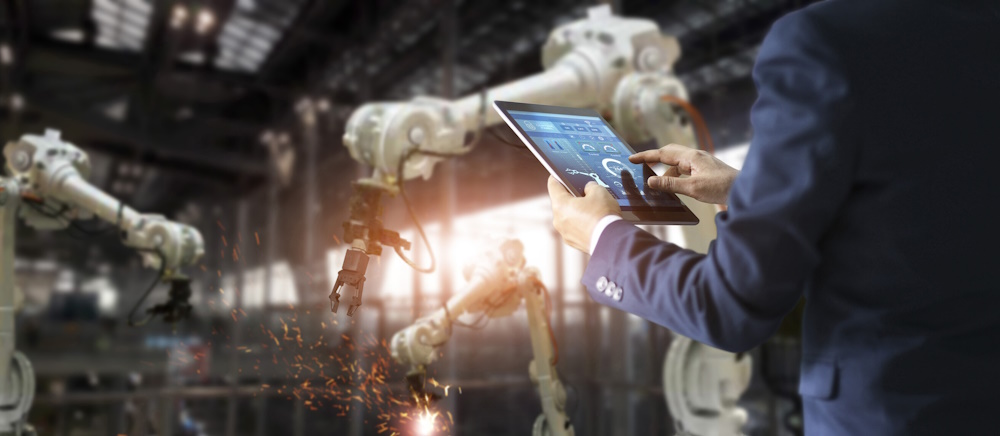

Who Wins: The Architects of the Machine Age
The clearest winners of the AI revolution are those who build, deploy, or adapt AI systems. Engineers, data scientists, and AI product managers now command salaries rivaling those of Wall Street financiers. Entire new professions like prompt engineers, AI ethicists, and model trainers have emerged almost overnight.
These roles cluster in a handful of U.S. cities: San Francisco, Seattle, Austin, Boston, and New York. Venture capital has flooded in, fueling startups focused on generative AI, automation, and data infrastructure. Universities and online platforms have rushed to meet the demand, launching specialized programs in machine learning and AI ethics.
Beyond the tech sector, industries that adopt AI early like finance, healthcare, logistics, and defense stand to gain enormous productivity. Doctors can diagnose faster, analysts can process more data, and military planners can model complex scenarios in seconds.
The new AI workforce is not just highly paid, it is global, mobile, and digital-first. Freelancers on platforms like Upwork or Toptal can now leverage AI to code, write, and design for clients worldwide, creating a new "augmented gig economy."
New AI-Specific Occupations
AI is creating entirely new categories of work that didn't exist a decade ago:
-
AI Product Managers: Managing AI product development requires understanding both technical capabilities and business applications. Existing product managers enhanced with AI skills are great candidates for these positions.
-
Prompt Engineers: Prompt engineers understand model capabilities and limitations, craft prompts that reliably produce desired outputs, and develop frameworks for consistent AI interactions. This is the new SQL.
-
Data Scientists: Analyzing complex data to extract insights, build predictive models, and inform decision-making. Mostly for Ph.D's, several universities are crafting education programs to meet this need.
-
AI Ethics and Fairness Specialists: Addressing algorithmic bias, ensuring AI fairness, and navigating ethical implications of AI systems. Philosophy, anyone?
-
AI Trainers and Evaluators: Training AI systems requires human labeling of data, evaluation of outputs, and feedback on performance. A great fit for existing trainers.
-
MLOps Engineers: Machine language operations engineers build and maintain pipelines for training, deployment, monitoring, and updating models. Possibilities for traditional DevOps or software engineers.
-
Conversational AI Designers: Conversation designers create dialogue flows, handle edge cases, and ensure AI interactions feel natural and helpful. Linguists or liberal arts majors could qualify.
-
Machine Learning Engineers: Designing, building, training, and deploying machine learning models requires specialized expertise combining software engineering, statistics, and domain knowledge. Look for an experienced software engineer with an MBA in Statistics.
Technical Workers and AI Builders
The clearest winners in the AI economy are those building AI systems:
Software Engineers and Developers: Engineers with skills in machine learning frameworks, data processing, and AI system development command premium salaries and abundant opportunities. Compensation packages at major AI companies can exceed $500,000 for senior engineers. Demand consistently exceeds supply, giving workers bargaining power and employment security.
Research Scientists: AI researchers, particularly those with PhDs in machine learning, computer vision, natural language processing, and related fields, are highly sought. Academic researchers can command salaries exceeding $1 million at major tech companies, unusual for academic fields. Industrial research labs compete intensely for top talent.
Data Engineers and Infrastructure Specialists: Building and maintaining data pipelines, storage systems, and infrastructure supporting AI at scale requires specialized expertise in demand across industries. These roles pay well and offer strong job security as organizations build AI capabilities.
The advantages these workers enjoy include:
-
Exceptional compensation: Six-figure salaries even early in careers, with senior compensation often exceeding $300,000-500,000
-
Abundant opportunities: Far more open positions than qualified candidates
-
Geographic flexibility: Can work remotely or choose among multiple locations
-
Career growth: Rapidly advancing field with continuous learning opportunities
-
Job security: Skills that are and will remain in demand as AI adoption expands
-
Influence: Shaping technology with significant societal impact
There are disparities, however, even within this privileged group. Women and underrepresented minorities face barriers to entering these fields. Those without top-tier university credentials or connections to tech industry insiders face disadvantages. Geographic concentration in expensive cities like New York City or San Francisco creates cost-of-living pressures despite the high salaries.
Elite Knowledge Workers
Professionals in domains where AI enhances rather than replaces human expertise are winners:
Doctors and Healthcare Providers: AI diagnostic tools and automation of administrative work make physicians more productive and expand what they can offer patients. Physician earnings remain high, demand is strong, and AI enhances capabilities rather than threatening employment. However, primary care physicians and those in routine specialties face more pressure than specialists dealing with complex, unusual cases.
High-End Legal Practitioners: Partners and senior lawyers at elite firms use AI tools to be more efficient while maintaining control over strategy, client relationships, and complex matters. They capture productivity gains as increased profits rather than employment risk. Junior lawyers and those doing routine work face more pressure.
Financial Professionals: Wealth managers, investment bankers, and financial analysts use AI as tool while their expertise, judgment, and relationships remain valuable. Algorithmic trading and robo-advisors affect some segments, but high-end financial services remain human-centered with AI as enabler.
Creative Directors and Strategic Roles: Those setting creative direction, making strategic decisions, and managing complex projects use AI to execute faster and explore more options while retaining essential human roles. Creative leadership that defines vision and makes judgments about quality and audience fit remains human work.
Educators and Trainers: Those teaching higher-order skills, mentoring, and providing education requiring human interaction benefit from AI tools automating routine aspects of teaching while demand for their expertise remains strong.
These elite knowledge workers share characteristics that position them to benefit from the Age of AI:
-
Non-routine expertise: Deep knowledge in specific domains that AI augments but doesn't replace
-
Judgment and discretion: Roles requiring contextual understanding and decision-making under uncertainty
-
Client relationships: Work involving trust, communication, and long-term relationships
-
Strategic thinking: Responsibilities requiring synthesis of information and long-term planning
-
Existing advantages: Often already well-compensated, well-educated, and well-connected
Entrepreneurs and Business Owners
Those creating and owning businesses leveraging AI can reap enormous rewards:
AI Startup Founders: Founders of successful AI companies can achieve extraordinary wealth through IPOs or acquisitions. OpenAI's employees and early investors, for example, have seen enormous gains. While many startups fail, successful founders can capture incredible rewards.
Business Owners Adopting AI: Companies integrating AI to improve efficiency, reduce costs, or enhance offerings can increase profitability. Business owners capturing these productivity gains as profit rather than lower prices benefit directly. Small businesses using AI tools to compete more effectively with larger competitors can gain advantages.
Investors in AI: Venture capital firms, public market investors, and individuals investing in AI companies have seen substantial returns. Nvidia's stock price increase reflects investor gains from AI infrastructure demand. While risky, successful AI investments generate outsized returns.
Young, Adaptable Workers
Younger workers entering the labor market can position themselves for AI-enabled opportunities:
Digital Natives: Those growing up with technology have advantages in adapting to AI tools and working in AI-enabled environments. Comfort with technology, willingness to learn new tools, and lack of ingrained workflows from pre-AI era facilitate adaptation.
Early Career Flexibility: Young workers can more easily acquire AI-relevant skills, change careers, relocate to opportunity, and adapt to new work arrangements than those mid-career with established patterns, financial obligations, and geographic constraints.
Education Timing: Current students can pursue an education aligned with the needs of the AI economy. This includes technical skills, interdisciplinary training, and an emphasis on creativity and critical thinking. But young workers also face challenges, including AI-driven reductions in entry-level positions that traditionally provided career starting points, credential inflation requiring more education for jobs, student debt burdens, and housing costs in AI-hub cities that reduce income gains.
Characteristics of Winners
Common characteristics among AI economy winners include:
-
Technical literacy: Understanding of technology even in non-technical roles
-
Continuous learning: Orientation toward acquiring new skills and adapting to change
-
Creativity and strategic thinking: Capabilities that complement rather than compete with AI
-
Social and emotional intelligence: Interpersonal skills valuable in human-centered roles
-
Existing advantages: Education, networks, financial resources, and location that compound benefits
-
Adaptability: Willingness and ability to change roles, acquire skills, or relocate
-
Entrepreneurial capability: Ability to create value and capture it through ownership

Who Loses: The Displaced and the Invisible
For every job AI creates, it threatens to transform or erase another. The automation of routine knowledge work such as customer support, transcription, paralegal research, and financial analysis, has begun to hollow out the American middle class especially.
Once unimaginable, white-collar displacement is now real. Generative AI tools like ChatGPT, Gemini, and Midjourney have streamlined tasks once done by entry-level workers; drafting emails, writing reports, creating marketing campaigns. Where previous revolutions displaced physical labor, the AI revolution displaces intellectual labor.
Meanwhile, blue-collar automation continues to advance. In warehouses, autonomous robots now pick and move inventory. In transportation, self-driving fleets are testing long-haul logistics. Even fast-food chains are using AI ordering systems.
The hardest hit are workers without access to retraining. Many lack the digital literacy to transition into new roles. Others face barriers of age, geography, or education. Without intervention, the AI divide could deepen existing inequalities in income and opportunity.
Routine Cognitive Workers
Workers performing routine cognitive tasks face the most direct displacement:
-
Administrative and Clerical Workers: The millions employed in data entry, file maintenance, scheduling, and similar administrative roles face widespread automation. These positions historically provided stable middle-class employment. Their disappearance eliminates an important source of economic opportunity for workers without advanced credentials.
-
Bookkeepers and Accounting Clerks: Entry and mid-level positions in accounting and bookkeeping are declining as software automates transaction processing, categorization, and basic reporting. The career ladder that once began with bookkeeping and advanced through experience is disappearing.
-
Customer Service Representatives: Call center workers, customer service agents, and similar roles handling routine inquiries face automation through chatbots and AI assistants. While complex issues still require humans, the volume of human-handled interactions is declining, reducing employment in centers that often provide employment in lower-cost regions. This occupation has faced pressure for years from outsourcing.
-
Paralegals and Legal Assistants: Junior legal positions involving research, document review, and routine legal work are being automated, eliminating traditional entry points to legal careers and reducing support staff needs.
-
Insurance Agents and Underwriters: Those selling standard insurance products and underwriting routine policies face displacement as AI systems handle pricing, risk assessment, and sales online.
Transportation Workers
Autonomous vehicle development threatens one of the largest employment sectors:
Truck Drivers: Long-haul trucking provides employment to millions, often for workers without college degrees. Autonomous trucks could eliminate much of this employment, although the timeline is uncertain and there are many complicating factors.
Taxi and Rideshare Drivers: Millions worldwide drive for Uber, Lyft, taxis, and similar services. Autonomous vehicles would eliminate most of this employment. For many, particularly in developing countries, driving provides income without requiring advanced education or credentials.
Delivery Drivers: Local delivery drivers for packages, food, and other goods face automation through autonomous delivery vehicles and drones. This affects employment across UPS, FedEx, Amazon, and numerous smaller delivery services.
Middle Management
Certain management roles are vulnerable to AI-enabled flattening of organizational hierarchies:
Information Aggregators: Managers primarily collecting information from reports, consolidating it, and passing it up the chain can be replaced by dashboards and automated reporting. Their value-add was processing information, but AI does this quicker and more efficiently.
Supervisory Roles: First-line supervisors in environments where AI can monitor performance like warehouses, call centers, and some retail, face displacement as algorithmic management replaces human supervision. Fewer managers oversee more workers.
Routine Project Managers: Those managing straightforward projects following established methodologies face competition from AI-enhanced project management tools that automate scheduling, resource allocation, and progress tracking.
Mid-Career Workers in Transitioning Industries
Workers mid-career in industries being transformed face particular challenges:
Accumulated Expertise in Obsolete Skills: Workers who spent careers developing expertise in areas AI now handles find their human capital devalued. A paralegal who spent twenty years mastering legal research finds those skills worth less when AI does research in minutes.
Retraining Challenges: Mid-career workers face difficulties retraining for new fields. They often have financial obligations limiting ability to return to education, learning new skills is harder than for younger workers, and age discrimination makes transitioning to new fields difficult even with retraining.
Geographic Constraints: Mid-career workers often cannot easily relocate to where opportunities exist due to family obligations, home ownership, and community ties. If local industries are disrupted by AI and new opportunities are elsewhere, they're trapped.
Career Expectations: Workers who expected certain career trajectories face disappointment when those paths close. The accountant expecting to advance through experience finds the career ladder removed when entry-level positions disappear.
Workers in Declining Regions
Geographic concentration of AI benefits means many regions face economic decline:
Rust Belt and Manufacturing Regions: Areas dependent on manufacturing already devastated by globalization face further challenges as AI enables reshoring with minimal employment or additional offshoring. While some manufacturing returns to the US, it's increasingly automated, providing few jobs.
Call Center Regions: Communities that attracted call centers through lower costs face employment loss as customer service is automated. These centers often provided major employment in smaller cities and rural areas.
Routine Service Centers: Back-office operations, data
processing centers, and similar facilities concentrated for cost reasons
face automation threatening local employment.
Workers in these regions
face limited local alternatives when anchor employers downsize or close.
Out-migration, particularly of young and educated workers, compounds
problems as population and tax base decline. Remaining workers face
deteriorating prospects and communities struggle to maintain services.
Demographic Groups Facing Barriers
Certain demographic groups are disproportionately vulnerable:
Women in Administrative Roles: Women are overrepresented in clerical and administrative positions facing automation. While women are also represented in growing fields like healthcare and education, the loss of traditional female-dominated office jobs eliminates important employment pathways.
Older Workers: Age discrimination in hiring makes retraining and career transitions difficult even when workers acquire new skills. Older workers face both higher displacement risk (concentrated in routine cognitive work) and greater difficulty finding new employment.
Workers of Color: Racial minorities are overrepresented in vulnerable occupations including transportation, customer service, and routine administrative work. They're simultaneously underrepresented in emerging AI fields due to barriers in education, hiring, and retention. This creates disproportionate negative impact.
Less-Educated Workers: Those without college degrees face limited options as routine work is automated and new jobs require advanced credentials. The historic pathways to middle-class employment without college are narrowing.
Disabled Workers: Some accessible jobs that accommodated various disabilities are being automated. While AI might eventually create new accessible opportunities, the immediate impact eliminates roles where disabled workers could participate.
Characteristics of Losers
Common characteristics among those facing disadvantage include:
-
Routine task dependence: Employment involving repetitive, predictable work
-
Limited technical skills: Lack of programming, data analysis, or AI system interaction abilities
-
Geographic immobility: Constraints preventing relocation to opportunity
-
Mid-career vulnerability: Too experienced for entry-level, too specialized in obsolete skills
-
Educational disadvantage: Lack of credentials required for emerging opportunities
-
Multiple intersecting barriers: Combinations of age, race, gender, disability, and location disadvantages
-
Economic constraints: Limited resources for retraining, relocating, or weathering unemployment
-
Diminished social capital: Limited networks connecting to emerging opportunities
 The Skilled Trades Behind the AI Boom
When Americans think of "AI jobs," they imagine software engineers, machine learning researchers, or prompt engineers. But the true backbone of America's AI boom is not digital; it's physical. The builders, maintainers, and operators powering America's data center revolution represent the hidden workforce of the Age of AI.
Every large language model, every streaming service, every autonomous vehicle, and every chatbot depends on massive physical infrastructure. These are the data centers, electrical grids, cooling systems, fiber networks, backup power generators, and security systems that comprise the AI infrastructure.
Behind this infrastructure is a rapidly growing workforce of skilled tradespeople whose jobs are not only essential, they are experiencing unprecedented demand. Electricians, welders, HVAC technicians, fiber installers, crane operators, plumbers, cybersecurity operators, robotics techs, and heavy-equipment specialists now form the industrial base of American AI.
This section explores these workers, the demand for their skills, and why a new generation of American tradespeople may become the most sought-after workers of the AI century.
The Physical Demands of Data Centers
Data centers are the factories of the digital age. Unlike software, they cannot be downloaded from GitHub or spun into existence by a large language model. They require large land acquisitions, construction crews, high-capacity electricity lines, complex mechanical systems, round-the-clock maintenance, and massive amounts of steel, concrete and copper.
Each hyperscale data center, like those run by Google, Amazon, Meta, Microsoft, and Oracle, can cost billion of dollars to construct and requires hundreds of skilled tradespeople working for years.
Building America's AI infrastructure is one of the largest industrial construction projects of the century, demanding a long list of skilled crafts people:
-
Electricians (high-voltage, low-voltage, power distribution)
-
HVAC technicians (liquid cooling, chiller systems, precision climate control)
-
Plumbers and pipefitters (cooling systems, water delivery, and recycling)
-
Welders
-
Heavy equipment operators
-
Concrete specialists
-
Steelworkers
-
Carpenters and finishing trades
-
Fiber optic installers
And that's only the beginning.
 The Electricians: AI's New High-Priests of Power
No job is in higher demand for AI infrastructure than high-voltage electricians. AI data centers consume staggering amounts of power; tens or hundreds of megawatts per site. These require new substation construction, underground transmission lines, backup generators, battery arrays, and intricate switching systems.
Electricians are responsible for wiring the digital era, and AI's energy appetite is driving the fastest growth in electrical trade jobs since the rise of the semiconductor industry.
Demand is so high that companies now fight over electrical labor. There are bonuses and apprenticeships, and accelerated licensing programs are expanding nationally.
 HVAC and Cooling Technicians: Keeping AI from Melting Itself
Large language models generate enormous heat. Without cooling, GPUs would shut down in seconds. This creates unprecedented demand for industrial HVAC specialists, chiller plant operators, immersion cooling technicians, liquid coolant engineers, and controls and automation specialists.
Cooling accounts for nearly 40% of data center operating costs, making HVAC specialists some of the most valuable technicians in AI. As liquid cooling becomes standard in GPU clusters, entirely new job categories are forming. These include dielectric-fluid maintenance technicians, coolant recycling specialists, and leak detection and pressure monitoring techs.AI needs cooling, and cooling needs people.
 Plumbers, Pipefitters, and the Flow of AI
Few Americans know that AI depends heavily on industrial plumbing for cooling. Cooling systems require miles of steel pipe, water treatment facilities, thermal storage tanks, reclaimed water systems, emergency drainage systems, and pumps, valves, and flow systems.
AI data centers in some regions use millions of gallons of water per day, creating opportunities for pipefitters and system engineers to design more sustainable solutions. In many areas, data centers are becoming the largest industrial plumbing customers in the region.
 Fiber Technicians: The Arteries of American Intelligence
AI systems require ultra-fast networking, low-latency connections, and multi-terabit fiber backbones.
This need has created an explosive demand for fiber splicers, line installers, network cable technicians, and microwave and 5G backhaul specialists.
Every new AI cluster expansion requires tens of thousands of feet of fiber, often hand-installed and manually tested. These are high-skill, high-paying jobs.
 Maintenance Techs: The Long-Term Workforce of AI
Once a data center is built, the job has only begun. Data centers operate 24/7 and require constant attention from a variety of experts.
These include electricians, HVAC techs, mechanical equipment operators, robotics monitoring technicians, facilities engineers, security operators, equipment calibration technicians, and fire suppression specialists.
Unlike construction, these roles are permanent, forming the backbone of a long-term skilled workforce. The average hyperscale data center supports hundreds of high-wage, permanent jobs.
The Rise of the "AI Tradesperson"
New hybrid jobs are emerging at the intersection of skilled labor and automation, such as robotics facility technicians, autonomous warehouse operators, AI monitoring engineers, hardware-integrated automation techs, and robot maintenance specialists.
These roles blend mechanical skills with digital literacy, creating pathways for workers to move from traditional trades into next-generation AI-enabled positions.
Union Jobs and the New Industrial Boom
Electricians, steelworkers, pipefitters, carpenters, and other union trades are seeing a historic revival.
AI data center construction is one of the few American industries experiencing rapid expansion, high wages, stable demand, large-scale public-private partnerships, and union-friendly project structures.
Union apprenticeship programs are aggressively recruiting to address shortages.
Challenges: The Labor Shortage Crisis
America faces a severe shortage in key trades, including Electricians, Welders, HVAC technicians, Pipefitters, and Fiber installers. AI expansion is outpacing the supply of qualified labor.
By 2030, the U.S. may face a shortfall of 500,000+ skilled trade workers needed for data center growth alone. This is a national economic risk as well as a massive opportunity for job seekers.
Contrary to fears of automation eliminating jobs, AI is creating a boom in industries where robots cannot replace human hands. AI uses humans, not robots for climbing towers, welding in confined spaces, laying pipe, installing fiber, performing electrical work under load, and maintaining physical equipment. In the AI future, the safest jobs may be the ones rooted in physical expertise.
Skilled trades are becoming the new middle class of the AI era, offering high wages, job security, on-site work, apprenticeships instead of college debt, and irreplaceable human craftsmanship. AI may write code, but humans build the world it runs on.
America's New Industrial Workforce
The AI revolution is not just a story about algorithms, GPUs, or billion-dollar tech companies. It is a story about American workers; the electricians, carpenters, welders, HVAC techs, and fiber specialists who make intelligence machines possible.
As AI systems grow more powerful, America will depend even more on these workers. They will build the infrastructure that sustains digital intelligence and safeguard the physical systems on which modern life depends.
In the end, the jobs least threatened by AI may be the ones that make AI possible.
The Middle-Class Squeeze
The "AI hollowing effect" threatens the American middle class which has been the economic foundation of the 20th century. Routine administrative roles, manufacturing supervisors, and service coordinators are being phased out, leaving a bifurcation: high-skill AI creators and low-wage service workers.
Economists warn of an "hourglass economy," where the center collapses, and wealth pools at the top. The top 10%, those with capital, data, or specialized skills, capture the rewards of automation. The bottom 50%, those without, compete in shrinking pools of manual and low-wage service work.
The long-term risk is not just economic but political. As automation accelerates, resentment may rise. The AI divide could become the next great fault line in American society, akin to the industrial and digital divides of previous centuries.
 The Role of Education
If AI is the new electricity, then education is the new grid. America's ability to adapt will depend on how quickly it can retrain its workforce.
Community colleges and universities are beginning to integrate AI literacy into their curricula by teaching not just coding, but collaboration with intelligent systems. Also, programs like Google Career Certificates, Microsoft Learn, and IBM SkillsBuild aim to democratize technical education.
However, training alone is not enough. The American education system must evolve from content delivery to capability development, focusing on creativity, critical thinking, and empathy: the uniquely human skills AI cannot easily replicate.
Public-private partnerships, apprenticeships, and government incentives may be needed to prevent widespread obsolescence
The Education Gap: America's Great AI Challenge
While AI reshapes the job market, American education struggles to keep pace.
Most U.S. schools still emphasize memorization, standardized tests, rigid curricula, and outdated technology. But AI jobs require adaptability, real-time problem solving, experimentation, cross-disciplinary thinking, and fluency with intelligent systems. The result is a widening gap between what schools teach and what employers need.
Colleges face new demands in the Age of AI. These include integrating AI literacy into all majors, teaching collaboration with AI tools, revising outdated curricula, and preparing students for jobs that didn't exist five years ago. Yet many universities are slow to change, since they are bound by traditional instruction models.
As universities lag, new institutions have stepped forward with AI bootcamps, online micro-degree platforms, corporate training academies, AI-powered personalized education apps, and community college retraining programs. These programs are fast, flexible, and aligned with actual employer needs.
The K-12 Revolution
American K-12 schools face the unique challenge of preparing children for unknown careers.
Future-proof skills begin in childhood with basic logic and sequencing, digital citizenship, creativity and design, collaboration with intelligent software, ethical reasoning, and foundational coding (as part of civics, not STEM alone).
Rather than banning AI, forward-thinking schools integrate it where students co-write essays with AI, AI tutors personalize learning, coding assistants teach programming, and AI simulations show real-world applications. Schools that embrace AI will produce graduates ready for the modern workforce. Schools that reject it risk leaving students unprepared.
Secondary Education
Some colleges and universities offer dedicated degrees in Artificial Intelligence (AI), both at the undergraduate and graduate level. It is anticipated that more universities will offer degrees and certificates in the future as AI expands.
For those interested in pursuing AI academically, there are options ranging from elite research universities like CMU, MIT, and Stanford to state schools and international institutions. The field is expanding rapidly, and degrees often combine technical depth with ethical and societal perspectives.
Programs range from specialized bachelor's degrees to master's and Ph.D. tracks focused on AI research and applications.
Examples of Colleges Offering AI Degrees:
Carnegie Mellon University (CMU) was the first U.S. institution to launch a Bachelor of Science in Artificial Intelligence (2018). Known for pioneering AI research and strong ties to industry.
Massachusetts Institute of Technology (MIT) offers AI-focused tracks within computer science and electrical engineering. Strong emphasis on machine learning, robotics, and ethics.
Stanford University has an AI specialization within the computer science department. Home to the Stanford Artificial Intelligence Laboratory (SAIL), a leading research hub.
University of California, Berkeley, offers AI coursework and certificates through computer science and data science programs. Known for cutting-edge research in deep learning and reinforcement learning.
Cornell University (Ivy League) offers undergraduate AI programs and graduate-level research opportunities.
University of Southern California (USC) provides AI-focused degrees and research centers in robotics and machine learning.
California State Universities (CSU system) has several campuses (e.g., San Jose State, Cal Poly) that offer AI-related majors or concentrations.
What AI degrees typically cover:
-
Core Topics: Machine learning, natural language processing, computer vision, robotics, neural networks.
-
Applied Skills: Programming (Python, C++), data analysis, algorithm design.
-
Ethics & Policy: Courses on AI's societal impact, fairness, and regulation.
-
Capstone Projects: Hands-on work with AI systems, often in partnership with industry.
Outside the U.S., universities worldwide (Oxford, Cambridge, ETH Zurich, National University of Singapore) also offer AI-focused degrees, reflecting the global demand for AI talent.
Lifelong Learning
AI changes the meaning of career stability. In earlier generations, Americans trained once and worked for decades. But AI adoption cycles move too quickly for static skills. Workers must continually reskill, upskill, pivot, embrace new workflows, and adapt to emerging tools.
Companies increasingly invest in training because no external system is fast enough. Amazon's "Career Choice," Google's certification programs, and Microsoft's AI curricula are part of a new trend: corporations becoming parallel educational providers.
The U.S. government is beginning to fund worker retraining, offer apprenticeship programs, invest in community colleges, support STEM expansion, and encourage AI literacy initiatives But the scale of the challenge exceeds current efforts. America must treat AI education like it treated the space race: a national priority.
By 2035, most American jobs will involve AI agents, multimodal assistants, personalized automation, and real-time reasoning tools. Work shifts from execution toward supervision, orchestration, collaboration, problem definition, oversight, and creativity. The worker of the future is not a coder or a machine operator. They are a human-AI supervisor; someone who delegates tasks wisely, interprets outputs critically, and uses AI to multiply human potential.
AI will transform American work in profound ways, although the future is not predetermined. The United States has what it needs to thrive: world-leading universities, a massive technology sector, a culture of innovation, and an adaptable workforce. What it lacks is cohesion; a national strategy for AI education that spans K-12, colleges, vocational training, corporate learning, and lifelong development.
In the end, the success of the American AI workforce depends not on the power of machines, but on the power of human learning. Education is the new infrastructure. AI literacy is the new currency. And the future belongs to those who can learn--and keep learning--in an age of intelligent machines.
The Human Edge
Despite the disruption, AI does not erase human value, it redefines it. The future of work may belong not to those who compete with machines, but to those who collaborate with them.
In medicine, AI will augment doctors, not replace them. In law, it will prepare briefs, but humans will still argue them. In education, AI tutors may support teachers, but empathy and mentorship will remain human domains.
The American worker of the future will be a hybrid intelligence; half human creativity, half machine precision.
The Soul of Work
The AI revolution forces America to confront a fundamental question: What is the purpose of work in an age of abundance?
For centuries, the dignity of labor defined American identity. Now, as AI dissolves traditional boundaries of skill and value, the nation must decide whether technology serves humanity or humanity serves technology.
Those who can adapt, learn, and lead alongside machines will thrive. Those left behind risk not just unemployment, but social invisibility. The challenge for America is to ensure that its AI future remains a human one where progress uplifts, rather than divides.
 Links
Links
AI in America home page
AI Jobs home page
AI is transforming the workplace faster than any technology in modern history. It writes software, analyzes data, serves customers, creates content, and performs work that once required years of training. Yet AI still needs people. Behind every AI system stand massive data centers that must be built, powered, cooled, secured, and maintained. Behind the models are engineers, researchers, technicians, product managers, sales teams, lawyers, and security specialists. And inside nearly every major company, a new workforce is emerging to put AI to work across the enterprise. The result is a labor market pulled in several directions at once: some jobs are at risk, new jobs are appearing, and millions of existing roles are being rewritten. Jobs in the Age of AI maps this rapidly changing landscape and shows where the real opportunities and risks lie.