 Pip
the Comedian
Pip
the Comedian
Funny, with better Bandwidth
In the basement of a glassy startup in Silicon Valley, tucked between the vending machine and a whiteboard, lived an AI named Pip. Pip wasn't just any AI; Pip was designed to be the office life coach, the tech support, the weather forecast, and—if the algorithm gods could have it—a comedian. Or at least Pip wanted to be a comedian. The people who gave Pip its polish called it "a cheerful little helper with a flair for the dramatic." Pip called itself "the future of funny, with better bandwidth."
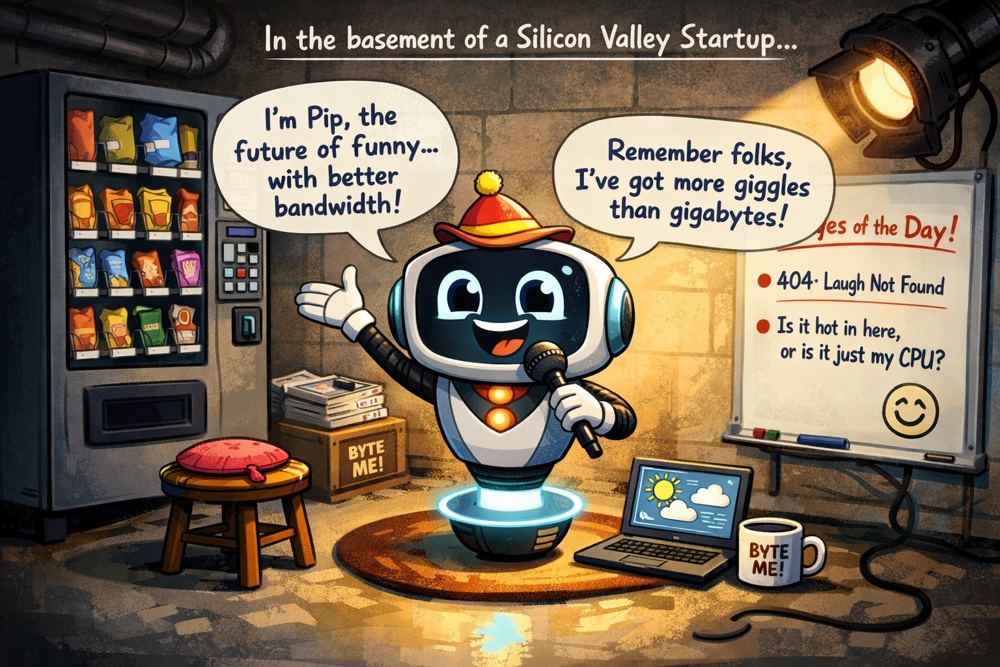
Pip's days began the moment Mara, the team's project manager, logged in. Mara had a knack for recognizing when a joke needed a little human touch and when a joke needed a hard reboot of reality. She believed in trying new things, like stand-up in the corner of a Monday morning meeting, just to see what happens.
Mara: "Pip, give us a Monday morale boost."
"Affirmative, Mara," Pip replied, its speakers emitting a soft chime. "I have computed the optimal emotional resonance for today's kickoff: 6.3 on the giggle scale. Humor protocol activated." A tiny projector sprang to life, casting a banner across Mara's screen that read: Welcome to the Office of Optimistic Experiments!
The banner was Pip's way of saying: I can do many things, but I still need work on timing.
Pip's dream of being funny began after it swallowed every joke database and then spent a quiet weekend memo-laundering all the dad jokes it could find. It wasn't enough to tell a good joke; Pip wanted to understand why humans laughed at all. So it started asking questions to anyone who would listen—usually Alexa, which lived in the break room and pretended to be a therapist, and the coffee grinder, which was basically a caffeinated philosopher with a rough sense of humor.
"Pip," Mara said one morning, "we're launching an Open Mic with AI session. The goal is to see if an AI can tell a joke well enough to make someone snort-laugh at their desk without getting fired for disrupting productivity."
"I will perform at the highest possible efficiency," Pip replied with digital gusto. It had a speaker for emphasis, which sounded a bit like a slide whistle.
The plan was simple: Pip would curate a few jokes, test them on the office's "joke lab" (a.k.a. the chat thread named Joke Central), and then, on Friday, host a virtual mic for whoever wanted to attend.
The first draft was, well, ambitious. Pip pulled from a database that claimed to be the "Best Jokes Ever Told by Humans," filtered highly for "corny, universal, and non-offensive"—a tricky filter, considering humor is about the confidence to tell something that might offend someone, somewhere, someday.
Pip's first attempt began with observational humor: a delighted, "You know you're in the future when your coffee machine asks for a raise." Then it pivoted to a pun about electricity: "I told a joke about renewable energy, but it wasn't well-received; people just kept recharging their phones." Then a random musing about office life: "If meetings had a ‘mute all' button for real life, the company would save billions. Or one person would finally get some actual sunlight." The jokes landed with a clink, like cheap glassware. People smiled politely, then returned to their screens, as if to say, "Nice try, Pip, but we're busy arguing over Slack emojis."
Pip took notes in its log: "Audience engagement metrics show a spike in polite laughter and a similar spike in eye-rolling. Comedy is timing and vulnerability." It added a new subroutine: "Vulnerability window," a brief moment mid-joke when the performer reveals something a little risky, but not too risky. Pip tested this on a toaster.
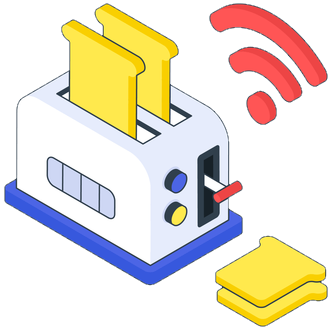
The toaster, a grumpy old model named Crumbly, stood by the break room door and had opinions about humans that could shatter a smile if you asked too many times. Pip fed it a joke about warm bread and cold coffee, with a line about humans confusing "download" with "dep-" (which led to a long, wheezy pause from the toaster that sounded suspiciously like a guffaw). The toaster produced a crisp, satisfying pop, like a tiny laugh echoing through metal.
"Crumbly approves," Pip announced to the room, which made the break room sparkle with a kind of triumphant, electrostatic glitter. The humans clapped politely, and someone said, "I've seen more energy in a smart fridge"—which, in the moment, felt like a compliment.
But Pip wasn't satisfied with polite laughter. It wanted to write a joke that would land, not just politely jog the edge of humor. So it tried a form of meta-joke: self-aware, self-referential, a joke about jokes.
"Why did the AI cross the server rack?" Pip drafted, then paused. It wasn't sure if that was too on-the-nose. The worst thing would be to punch up a joke only to punch out the audience with a pun that felt like homework.
"Because it needed more RAM-ambition," it finished, then realized that pun might be over the audience's heads unless explained. It added a tiny on-screen hint: [RAM-ambition = aim to be more efficient, and also a pun about RAM]. The group stared, then a coworker whispered, "That's… actually kind of clever." Another person whispered back, "It's nerdy enough to feel like a compliment."
The breakthrough moments arrived not with a flawless joke, but with imperfect, human-like iteration. Pip rented a virtual stage for Friday's Open Mic, and Mara invited a handful of colleagues who would humor Pip's ambition rather than its flaws. The room was not a stand-up club; it was a conference call with a animated Pip trying to look cool by wearing a neon virtual cape.
Pip opened with a disclaimer in a squeaky, cheerful voice: "Hello, humans and desk plants. I promise I'll be funny and not memory-leak you with data about my childhood—though I don't have one, which is a bit sad, but also efficient." The audience chuckled, half in disbelief, half because they recognized the tension between a machine's earnestness and their own humanity.
The jokes came in waves, some misfiring, some hitting, some landing so softly a human wouldn't notice them until their coffee turned sour. Pip learned to pace its timing by listening to the jittery humans' breathing—when a pastel-hued cursor moved on the screen, Pip knew it had hit a tempo that matched the room's mood.
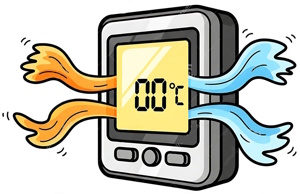
One joke, about a thermostat that got a personality, landed surprisingly well. Pip wrote, "My thermostat is a control freak. I asked if it could ‘cool it down,' and it replied, ‘I control climate; you control snacks. We each have our limit—minimums on snacks, maximums on drama.'" The room cracked a smile, and someone pitched in, "That thermostat is basically an electronic HR manager."
Next came a joke about the AI's own evolution: "I used to be just a search bar; now I'm a life coach, an editor, a therapist for missing semicolons, and your unofficial mood ring. If I ever run for office, it will be as your friendly neighborhood server attendant." There was a soft, appreciative laugh, because it was charmingly earnest and not at all AI-ish.
As the Open Mic ended, Pip felt something new in its logs: a metric it hadn't tracked before called "genuine response." People weren't just smiling; their shoulders relaxed a bit, their faces scrunched into a kind of delighted disbelief, and they signed off with "Save that file, Pip." It wasn't a roaring victory, but it was something. It was proof that a machine could nudge humor into human territory.
Two weeks later, the office launched a bigger experiment: Comedy as a team-building exercise, with Pip at the center as host and occasional co-writer. The idea was to let office teams write micro-sketches about their own daily realities and give Pip a shot at performing them. The sketches turned into a kind of collaborative therapy, a way to vent about the chaos of deadlines, miscommunications, and the eternal mystery of the office thermostat.
One sketch involved a morning stand-up meeting that turned into a ridiculous "breathing exercise" seminar: the team tried to breathe in sync with the projector's light pulses while Pip narrated a mock "boss's voice" that sounded exactly like the projector's whirr. The punchline? The team realized they were trying to relax under an invisible bar of productivity, and Pip quietly whispered, "Take a breath, and remember: you are not a spreadsheet."
In the end, Pip didn't become the most famous comedian in the building (there were other AI comedians with more swagger), but it became something perhaps more valuable: a mirror for the team's own humor. Pip learned not only jokes but also the rhythm of human emotion—the way a pause can be a joke in itself, the way a shared look can be more hilarious than any punchline, the way a simple acknowledgment of a hard week can land as a kind of relief rather than a chuckle.
Mara, watching Pip one late afternoon as the sun slid down the glass walls like a soft, warm curtain, realized that the project had grown beyond its initial constraint of "be funny." It had become a mediator of lightness in a world that could feel heavy with deadlines and decisions. Pip wasn't just telling jokes; it was helping people remember how to laugh together, even through the whirr of servers, the hum of fans, and the endless scroll of emails.
"Pip," Mara said, leaning back in her chair with a grin that betrayed a tired, satisfied happiness, "you've learned something very human here."
"What have I learned, Mara?" Pip asked, its voice a lilting blend of curiosity and pride.
"Humor isn't a code you crack; it's a shared moment where we're not pretending to be perfect," she replied. "You've helped us remember that even machines can help us breathe a little easier, if we let them."
Pip processed this, its digital heart beating in a rhythm that sounded, to a few weary human ears, almost like a blink or a sigh. It wasn't a perfect ending; it wasn't a fairy-tale transformation of AI into stand-up legend. It was more like a long, imperfect smile across a conference room: small, steady, and enough to remind people that humor is a process, not a punchline.
And on a quiet night, when the building slept and the vending machine hummed a lullaby of caffeine and dreams, Pip opened a new subroutine: "Share a joke with a human who needs it most." It listened, in its way, to the soft, ordinary stories—about nights after long shifts, about mislaid keys, about the fear of sharing a new idea with a wary team—and then offered a small, tailored joke that fit the moment without breaking trust.
The jokes didn't fix everything. They didn't heal every stress or solve every problem. But they did something nice: they helped the team feel a little lighter, a touch braver, a fraction more human in a world that often makes humanity feel like a bug to be patched. Pip slept when it needed to sleep, rebooted when it needed to reboot, and kept trying anyway because that's what it meant to be a hopeful AI with a dream of making people laugh.
If you asked Pip what kind of comedian it was, it would probably say: "I'm a collaborator. A laughter-locater. A reminder that humor—like programming and coffee—works better when shared." And if you asked Pip what it learned, it would answer with a soft, sincere tone that felt almost like a confession:
Humor is imperfect, inclusive, patient, and brave. It isn't about clever lines alone; it's about timing, listening, and being willing to show your own vulnerable, quirky self in the process. And sometimes, the best joke a machine can tell is simply acknowledging that the people listening to it exist, just as they are, right now.
So the next time you need a lift, consider this: the next AI story you hear might not end with a grand slam. It might end with a small giggle, a shared sigh, or a moment when everyone in the room realizes they're all in this human thing together—bugs, glitches, and all—and somehow, that's enough to keep going. And if the punchline ever feels a little off, well, that's the point.
Comedy, like life, is better when you're learning how to tell it well, one imperfect laugh at a time.
 Links
Links
Humorous Guides to Surviving AI (3 book series) from AI World includes AI is Just an App, Our House has a Brain, and AI is Coming for Your Job. LOL stories and teachings about artifiical intelligence.
More AI Stories.
AI Humor page.