 The Creativity Revolution
When Machines Learned to Dream
At the Fine Arts Competition of the Colorado State Fair in August 2022, Jason Allen submited a piece titled "Théâtre D'opéra Spatial" in the digital arts category. It's a stunning, Baroque-inspired work of art. Three figures in Victorian dress gaze through a circular portal at a dreamlike cosmic vista. The composition is a masterpiece. It wins first prize.
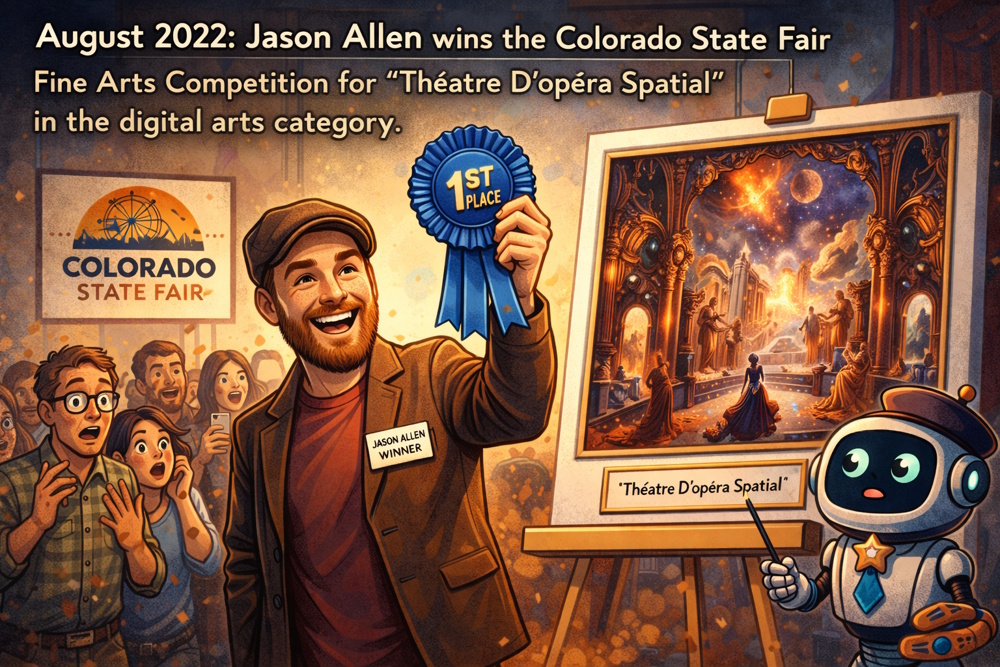
Immediately afterwards, the controversy begins. Jason Allen didn't paint it. He didn't even Photoshop it. He typed some words - a prompt - into Midjourney, an AI image generator: "A vibrant opera house with massive sci-fi architectural elements, baroque styling, people in Victorian-era clothing observing from ornate balconies, glowing celestial light..."
The AI created the image. He won the prize with AI-generated art. The backlash was immediate and furious.
"This isn't art. It's theft."
"He didn't
create anything. The AI did."
"This is the death of human
creativity."
"Artists are being replaced by algorithms."
Jason Allen's terse response was, "I prompted, curated, and refined the image over 80 iterations. I selected this from hundreds of generations. This is my artistic vision, executed through a new medium. How is that different from photography?"
In the aftermath the debate raged...and still rages. But something fundamental had shifted. For 40,000 years, creativity was uniquely human. From cave paintings and symphonies to novels and sculptures, the ability to create something from nothing—to imagine and manifest—was what separated us from animals, from machines, from mere matter.
Then AI learned to paint, compose, write, and the line separating human from machine creativity blurred beyond recognition.
This is the story of the revolution taking place in the creative arts.
The Image Revolution
It started in 2014 with Deep Dream. Google researchers discover that neural networks trained on images can generate trippy, hallucinogenic art, with cats everywhere, eyes in clouds, infinite spirals, etc. It's weird, it’s interesting, but it’s not threatening. It's merely a curiosity. A tech demo. No one thinks this is "real art."
GANs, Generative Adversarial Networks, took shape from 2015-2018. Ian Goodfellow invents GANs and soon thereafter two neural networks compete to produce art. A generator creates images while a discriminator judges if they're real. The generator improves to fool the discriminator. The cycle continues.
The result is surprisingly realistic images. Faces that don't exist in reality. Landscapes that could be real. It’s abstract art; still niche and obviously AI. Artists aren't worried...yet.
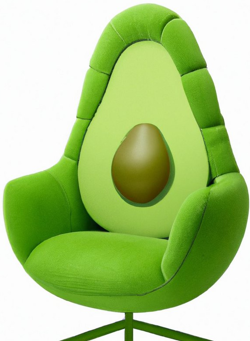
A huge breakthrough occurred in 2021 with the release of DALL-E from OpenAI, a year before ChatGPT. DALL-E is one of the first realistic text-to-image generators. You type a description and get an image: "an armchair in the shape of an avocado" → DALL-E creates it. Though impressive, the avocado armchair is a small image, cute, and obviously AI-generated.
Everything changes in 2022 with the Midjourney v4, DALL-E 2, and Stable Diffusion AI image generation software. Suddenly, AI can create photorealistic images in any art style (Renaissance, anime, photography, abstract, you name it). These are complex compositions that are virtually indistinguishable from human art, and it's accessible to everyone. The software is available free of charge or at low-cost and comes with simple, easy-to-use interfaces. You type what you want and receive the output in seconds. The art world is finally starting to take notice.
 The Artists' Response
The immediate reaction is outrage. Artists claim it’s theft since the AI was trained on their art, without permission, and without payment. The technical reality is Stable Diffusion, for example, was trained on 5 billion images scraped from the internet. The training data includes copyrighted artwork. Artists were neither consulted or compensated.
For example: Type [create something] in the style of Greg Rutkowski (a fantasy artist) into Stable Diffusion. It convincingly generates images in his style. Rutkowski responds, "I didn't give permission. My style is being replicated. My livelihood is threatened. And I can't do anything about it."
The question is whether training AI on copyrighted images is legal. The legal answer is unclear. Cases have been heard, some decisions have been rendered, and more lawsuits are pending.
Some say its transformative, that using copyrighted works to train AI falls under "fair use," a legal doctrine that allows limited use of copyrighted material without permission under certain conditions.
Others claim it’s a copyright violation. Copyright holders argue that unauthorized use of their images for AI training harms their ability to license those works and undermines their market. Several lawsuits have been filed against AI companies like OpenAI, Stability AI, and others for allegedly scraping copyrighted images without permission or compensation.
The practical reality is that AI exists. Image generation is real and a legal resolution awaits. Courts have yet to decide definitively.
The bottom line is that training AI on copyrighted images without permission is legally risky and currently subject to dispute. While some argue it qualifies as fair use, recent rulings and official reports suggest that such use is not automatically lawful and may infringe copyright. The legal landscape is still developing, and AI companies face lawsuits challenging their practices.
Meanwhile, tech companies are not on standby. OpenAI has released GPT-Image and Google has Nano Banana, two new and powerful image generators builtin the ChatGPT and Gemini frameworks.
 The Existential Crisis
Artists are not just afraid of copyright violation, but of being replaced altogether. Here are the economics:
Before AI:
- Need concept art? Hire an artist ($500-5,000)
- Need an illustration? Hire an illustrator ($200-2,000)
- Need an album cover? Commission a designer ($1,000-10,000)
After AI:
- Type a description into Midjourney ($10/month subscription)
- Get 100 variations in minutes
- Pick the best one
- Maybe pay an artist $50 to refine it
The displacement is real. Concept artists are losing their jobs. Stock photo sites are being decimated. Illustrators' rates are plummeting. And entry-level art jobs are disappearing.
One testimony from a commercial artist goes like this, "I spent 10 years learning to draw. I can create professional illustrations. I charge $500 for a piece that takes me 8 hours. Now a client can get 100 AI images for $10 in 10 minutes. They're not as good as mine. But they're good enough. And cheap enough. I've lost 70% of my income."
The counter argument is that photography didn't kill painting and synthesizers didn't kill musicians. These were both presumed assaults on artistic expression from new technology. AI is just another creative tool, like the camera or the synthesizer. The response is that photography expanded art while AI replaces artists. Who's right? It's complicated.
 The New Artists: Prompters
Prompt engineering emerges as a new skill. It is the process of creating, refining, and optimizing inputs (or prompts) to guide generative AI systems in producing specific, high-quality outputs. It involves crafting clear and effective prompts that help AI models generate accurate responses. In other words, prompt engineering is the practice of describing what you want so AI creates it.
It's not as simple as it sounds. A bad prompt like "draw a dragon" yields a generic dragon image. But a prompt like "draw a majestic ancient dragon perched on a mountain peak at sunset, scales shimmering with iridescent blues and purples, volumetric lighting, a cinematic composition" creates a stunning, detailed image, one that AI would not likely produce on its own.
The expertise is understanding AI's "language" coupled with a knowledge of art terminology. The process is iterating and refining, curating from hundreds of results, perhaps taking as long to produce as a "real" artist.
Is this art? Prize-winner Jason Allen says yes, it's artistic vision plus technical skill plus aesthetic judgment. Traditional artists say you didn't create it. You directed it and that's a very different thing.
- Is a film director an artist? They don't physically create most of what's on screen. They direct others to create their vision.
- Is an architect an artist? They design buildings others construct.
- Is a conductor an artist? They don't play instruments.
- Then why isn't a prompt engineer an artist?
A common retort is because the AI was trained on stolen human art. You're exploiting that theft. Creating prompts is not creating art.
The debate continues, and will likely continue well into the future.
Much more to come. Stay tuned!
 Links
Links
AI Revolutions home page.
Prompt engineering page. Also, tips from prompt shortcuts.