 El Salvador
Features tropical beaches, a rich history, vibrant culture, and majestic landscapes
[Editor: AI World has offices in the San Francisco Bay Area and in San Salvador, El Salvador. We feature El Salvador here.]
Located in the heart of Central America, El Salvador is a tropical jewel to behold. The country has a variety of attractions, including perpetually sunny beaches, quaint colonial towns, stunning volcanoes, colorful handicrafts, low prices, fine cuisine, natural landscape, ancient Mayan ruins, local culture, and countless opportunities for hiking, biking, surfing, relaxing, deep-sea fishing, swimming, and more.
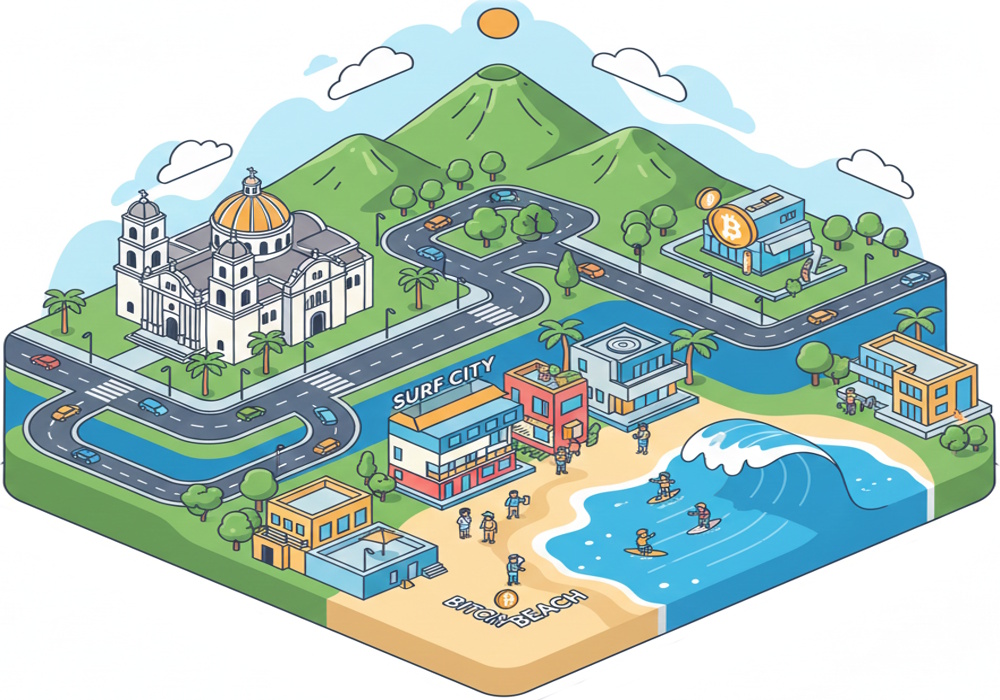
Here you'll find world-class surfing on empty, dark-sand beaches; coffee plantations clinging to the sides of volcanoes; pretty flower-filled villages with buildings splashed by murals; an historic downtown plaza, and sublime national parks.
It is also the safest country in the Western Hemisphere, thanks to the progressive, populist President Nayib Bukele. During his tenure, he has radically upgraded the infrastructure with magnificent coastal roads, revitalized the historical district in San Salvador, brought the Miss Universe Pagent to the country, made Bitcoin legal tender, hosted world champion surfing events, and imprisoned gangs like MS-13. President Bukele has been featured in TIME Magazine, interviewed by Tucker Carlson, and visited by Marco Rubio, US Secretary of State.
El Salvador introduced a major transformation in public healthcare with the launch of DoctorSV, an AI-powered medical platform that blends video consultations with artificial intelligence support and a unified electronic medical record. El Salvador is the first country in the world to offer a unified, AI-driven medical service to its entire population at no cost, delivering diagnostic accuracy above 90%, thanks to Google's latest technology which provides immediate access to care. The system uses Google's Gemini medical model to guide patients through AI-driven triage, assist doctors during consultations, and elevate diagnostic accuracy to world-class levels. The use of AI frees doctors from repetitive tasks, allowing more human-centered care.

✅ Here are a few of our recommendations if you decide to visit El Salvador, starting with the artist behind the colorful motifs you'll encounter throughout the country.
 Fernando Llort
Iconographer of El Salvador
Walking through the El Salvador International Airport or strolling downtown, you can see the El Salvador name spelled out in giant, colorful letter tiles. The artwork is inspired by the artist known as El Salvador's National Artist, Fernando Llort. It looks like this:

Fernando Llort was born in San Salvador in 1949. He briefly studied architecture and always made art, but the majority of his studies were dedicated to theology; first in Medellin, Colombia, later in France and Belgium and finally in Louisiana in the USA, where he pursued art more formally.
In 1971 he returned to El Salvador for good. "He was part of an anti-system group", Salvadoran artist Ronald Moran said. "He was part of a very organic movement, influenced by hippie culture and liberation theology." Llort was also influenced by Mayan culture and modern art, but sought to create a visual language of his own. And that visual language has its roots in the folk art traditions of his native country. Its folk art, with its colorful depictions and intricate details, serves not just as decoration but as a narrative of life, a mirror reflecting the spirit of the Salvadoran people and the underlying theme of much of Llort's world of art. His work has been displayed in the Museum of Modern Art and the Vatican Museum, and he has won numerous awards.
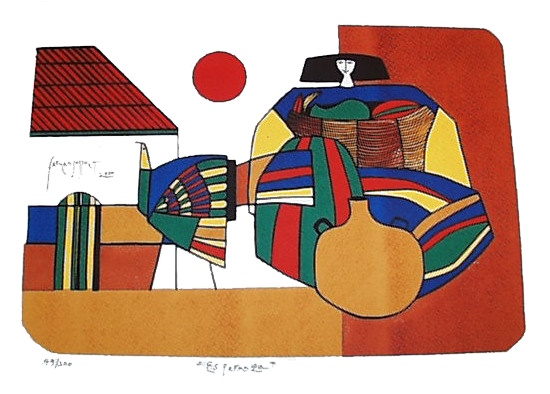
Fernando passed away in 2018, but you can visit his studio, "El Arbol de Dios", located in the Escalon district of San Salvador. You can purchase some of his art work or buy colorful folk art objects produced in the Llort style by his followers who now work in the studio.
Other sources of Salvadoran art are located in the mountain town La Palma, where Llort setup his first studio; Ataco, a delightful village on the Ruta de Los Flores (the route of the flowers); or Ilobasco, where many ceramic and wood products continue to be made by hand.
 Historical District
The historic downtown of the capitol San Salvador has well-known buildings, churches, and plazas that have played a significant role in the country's cultural and political history. The downtown area has always been the cultural center of the country, and much of it has been lovingly restored.
The historic downtown San Salvador area is worth visiting for its 18th and 19th Century buildings, historic plazas, and iconic churches. In the downtown area, you will be amazed by the majesty of the recently restored National Palace and the National Theater. The Metropolitan Cathedral, designed by the noted architect Jose Maria Duran, and the El Rosario Church add to the area's charm. There are numerous historical plazas such as General Gerardo Barrios, Plaza Libertad, and Plaza Morazan. These squares have been at the center of Salvadoran and Central American events for centuries.
Finally, visitors can go shopping at nearby local markets, experience the new BINAES National Library, or enjoy the traditional Salvadoran foods in one of the many restaurants. Located in the historical district, Starbucks Casa Bou is one of the most beautiful Starbucks in the world, thanks to the magnificent Art Nouveau architecture. It's a must-see (and taste) for tourists.

Historical district featuring Jose Maria Duran's Metropolitan Cathedral, where Saint Oscar Romero is buried
 Surf City,
here we come!
Surf City,
here we come!
Surf City in La Libertad, El Salvador, started as a project to increase tourism and make the country a top tourist destination. It worked, for El Salvador has since hosted several world championship surfing competitions, attracting some of the world's top surfers. Surf City showcases the fantastic Salvadoran surf spots, beautiful beaches, an amusement park, and several other tourist attractions.
Surf City is the tourism and surf development corridor along the coast of La Libertad, El Salvador, centered on world-class right-hand point breaks like Punta Roca and nearby beaches such as El Tunco and El Sunzal. It's a 20km coastal area in La Libertad that groups several beaches, surf towns, and tourism projects under one identity to promote the region. The area is marketed as El Salvador's main surf capital, combining consistent Pacific swells, new infrastructure, and a growing number of surf schools, hostels, and restaurants.
La Libertad's Surf City zone includes noted breaks such as Punta Roca, El Tunco, El Sunzal, K59, and others, many of them long, right-hand point or beach breaks. The best surf is typically during the rainy season (May through October), when south and southwest swells bring larger, more consistent waves. Smaller, beginner-friendly conditions typically appear in the drier months.
The main urban hub is the port city of La Libertad itself, with markets, a seafront pier, and newer attractions like the Sunset Park coastal amusement area and its boardwalk. Nearby beach villages such as El Tunco and El Sunzal have a more laid-back surf-town feel with hostels, bars, and tour operators.
Visitors find a wide range of accommodations from budget hostels to midrange resorts, plus surf camps and guiding outfits that organize trips up and down the La Libertad coast.
 Bitcoin Beach
Nearby Surf City, you can explore El Zonte, known to many as Bitcoin Beach. Bitcoin Beach is a community-based Bitcoin project centered in the surf town of El Zonte on the Pacific coast of El Salvador. The project gave rise to El Salvador receiving international attention as the first country in the world to accept Bitcoin.
Playa El Zonte is a small Pacific beach town known as a world surfing mecca, featuring warm water and strong waves that attract surfers from all over the world. El Zonte is also where a local, circular economy using Bitcoin for everyday payments emerged in 2019.
Bitcoin Beach is an initiative to build a sustainable local economy where residents and businesses regularly use Bitcoin for routine transactions like food, services, and utilities, rather than just speculation. The project's stated mission is to promote financial inclusion in an area where many people lack bank accounts and access to traditional financial services.
The movement began when an anonymous early Bitcoin holder funded a nonprofit-led effort in El Zonte, with the condition that the funds be used to create a functioning Bitcoin-based local economy. Local organizers started paying youths and workers in Bitcoin and encouraged neighborhood shops, surf schools, and small eateries to accept it for payments.
Residents who previously could not obtain bank or merchant accounts gained a way to save, receive remittances, and transact digitally via mobile Bitcoin wallets. The experiment helped generate jobs, support community programs, and attract crypto-interested tourists and surfers, boosting small business activity in the town.
Hostels, cafes, and surf shops still accept Bitcoin via phone wallets, alongside cash (El Salvador's currency is the US Dollar), making it a practical place to experience day-to-day crypto use in person, as well as a world-class surfing destination on the beautiful Pacific coast.
 Links
Links
External links open in a new tab:
- britannica.com/place/El-Salvador
- bbc.com/news/world-latin-america
- mecce.ca/country_profiles/cce-country-profile-el-salvador
Tourism
- cultura.gob.sv/parque-arqueologico-tazumal
- tuncolife.com/top-10-things-to-do-el-salvador
- everythingelsalvador.com/what-to-do-in-san-salvador
- theculturetrip.com/central-america/el-salvador/articles/the-10-most-beautiful-spots-in-el-salvador
- lonelyplanet.com/el-salvador
- tripadvisor.com/Attractions-Activities-El_Salvador
- viator.com/El-Salvador
- elsalvador.travel/category/town
Surf City
- epicsurfingadventures.com/surf-la-libertad/
- latamsurfing.com/el-salvador/la-libertad
- youtube.com/watch?v=nI6AzUSiTV8 La Libertad is the place to be
- en.wikipedia.org/wiki/La_Libertad,_El_Salvador
- surfline.com/travel/el-salvador/departamento-de-la-libertad/la-libertad-surfing-and-beaches/3585157
- perfectwavetravel.com/el-salvador-surf-guide/
- elsalvador.travel/category/surfcity/en/
- elsalvador.travel/article/ten-reasons-to-visit-surf-city/en/
Bitcoin Beach
- bitcoinbeach.com
- purosurf.com/riding-the-bitcoin-wave-exploring-the-phenomenon-of-bitcoin-beach-in-el-salvador/
- synota.io/bitcoin-beach-in-el-salvador/
- bbc.com/travel/article/20250625-the-beach-town-that-became-a-bitcoin-testbed
- en.wikipedia.org/wiki/El_Zonte
- cbsnews.com/news/bitcoin-beach-el-salvador-60-minutes-2022-04-10/