 GEO
GEO
Generative Engine Optimization
First, it was SEO. Now the conversation has shifted to GEO. It's a new trend: people are learning how to write content optimized for AI systems, not just search engines. GEO is becoming a major skill for creators and businesses alike.
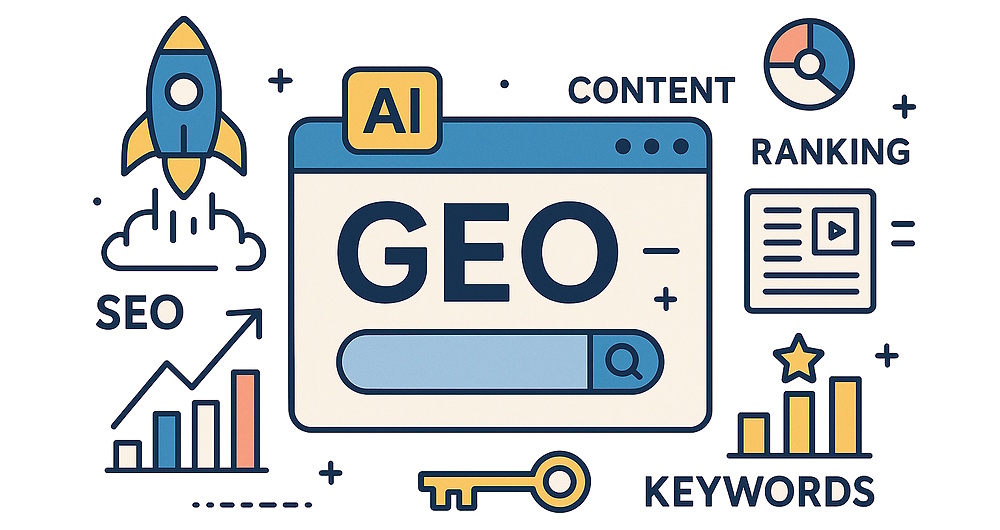
Generative Engine Optimization (GEO) is the emerging discipline of ensuring that generative AI systems represent, quote, and link to your content accurately in their answers. It's a complement to classic Search Engine Optimization (SEO) in an AI-first search landscape.
GEO includes creating content that works well with AI tools like ChatGPT, Gemini, or Llama. These tools are used by millions of people to ask questions and get answers. Instead of focusing only on Google searches, companies now write content that AIs can understand better. This helps them get noticed when someone asks AI tools for advice or information. A study shows that over 65% of businesses now use GEO to reach more people.
Generative Engine Optimization, or GEO, is a new discipline focused on improving how content appears inside AI-generated answers, rather than traditional search engine results.
As generative AI systems like ChatGPT, Gemini, Claude, and Perplexity increasingly act as "answer engines," they synthesize information instead of listing links. This shift means brands and creators must adapt their content so that AI systems can correctly retrieve, understand, and cite it. GEO emerged from academic research formalized by Princeton University affiliated authors, who describe generative engines as systems that gather and summarize information to answer user queries. The term was introduced in an academic paper titled *GEO: Generative Engine Optimization* by a Princeton-led team; they described it as a "new paradigm" to help creators improve visibility in generative answers, not just search rankings. In this new environment, visibility depends less on keywords and more on how well AI models can interpret structured, trustworthy, and consistent information.
GEO differs from traditional SEO because generative engines don't rank pages; they generate responses. Instead of optimizing for search crawlers, GEO focuses on supplying AI models with the signals they rely on: clarity, factual consistency, structured data, and authoritative context. According to industry reports, many businesses now appear incorrectly or inconsistently in AI results due to outdated or incomplete information, creating what some call an "AI visibility crisis". GEO aims to solve this by ensuring that content is machine-readable, up-to-date, and aligned with the way LLMs retrieve and summarize information.
In practice, GEO involves creating content that AI systems can easily parse: well-structured FAQs, clear descriptions, consistent business data, and authoritative explanations. Tools like GEO Studio, launched by Uberall, automate parts of this process by monitoring what AI systems say about a brand and generating structured, locally relevant content that AI can understand and reuse. Marketing analysts emphasize that GEO isn't a replacement for SEO but an evolution of it. It's an adaptation to the rise of AI-powered platforms that answer questions directly rather than sending users to websites. As generative engines continue to shape how people discover information, GEO is becoming essential for ensuring that brands, creators, and experts remain visible in an AI-first world.
Think of GEO as being like SEO for AI assistants and answer engines instead of for traditional search results. It focuses on getting your content quoted and cited inside AI-generated answers from tools like ChatGPT, Gemini, Perplexity, Copilot, and AI Overviews, not just ranked as a blue link.
How It Differs from Classic SEO
Here's how GEO is different from classic SEO:
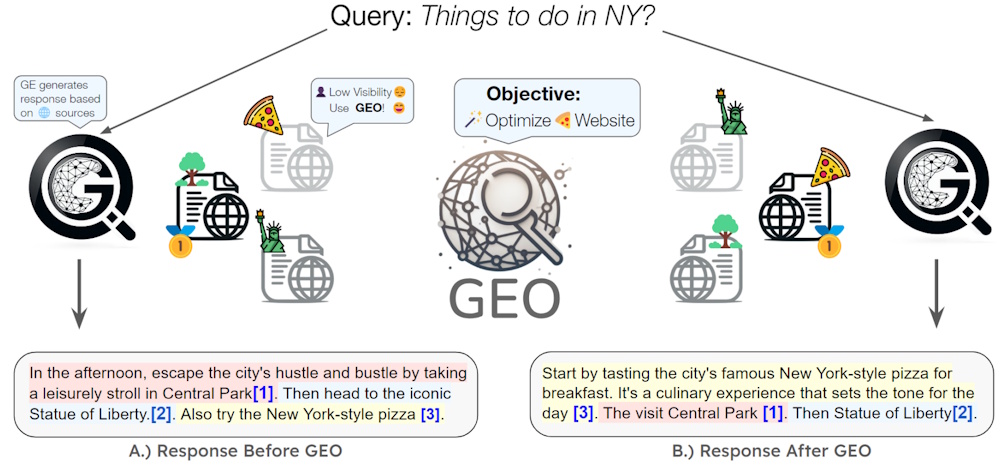
- SEO optimizes for ranked lists of links in engines like Google or Bing; GEO optimizes for summarized answers, where the AI synthesizes multiple sources into one reply and may only show a few citations.
- SEO focuses heavily on keywords, backlinks, and click-throughs; GEO emphasizes clear structure, factual precision, context, and authority signals so models trust and quote your content.
- The "win" in SEO is a high position on the SERP; in GEO, the "win" is your brand or page being named, linked, or paraphrased inside the AI's answer box itself.
Why GEO Matters Now
User journeys increasingly start in AI tools instead of Google: people ask ChatGPT, Gemini, or Perplexity directly for explanations, product advice, or comparisons, and often never click through to websites anymore.
With ChatGPT and other assistants serving hundreds of millions of weekly users, brands that ignore GEO risk becoming invisible in AI-driven discovery, even if they still rank well in traditional search.
Core GEO Tactics
- Structure content with clear headings, direct Q&A snippets, definitions, and step-by-step sections so models can lift coherent chunks into answers.
- Provide concise, factual statements with citations and statistics, plus schema/structured data, to strengthen your perceived reliability in AI training and retrieval.
- Build topical authority around specific themes (not just broad keywords), so models associate your domain with that niche and surface you in related answers.
 Links
Links
walkersands.com/about/blog/generative-engine-optimization-geo-what-to-know-in-2025
en.wikipedia.org/wiki/Generative_engine_optimization
onclusive.com/resources/blog/what-is-generative-engine-optimization-geo-guide
searchengineland.com/what-is-generative-engine-optimization-geo
linkedin.com/pulse/generative-engine-optimization-geo-future-ai-driven-search-anderson
insightland.org/blog/generative-engine-optimization-everything-you-need-to-know-for-2025
dataslayer.ai/blog/generative-engine-optimization-the-ai-search-guide
coursera.org/articles/what-is-generative-engine-optimization
writesonic.com/blog/what-is-generative-engine-optimization-geo
seo.com/ai/generative-engine-optimization
finance.yahoo.com/news/uberall-launches-first-generative-engine
qsrmagazine.com/story/what-generative-search-optimization-means-for-qsr-marketing