 Language Learning
Learn a Foreign Language
AI is a powerful tool for learning languages, from beginners to advanced students, and it shows up as chat partners, tutors, and classroom helpers. Learning a language with AI has become one of the most effective, flexible, and surprisingly fun ways to build real fluency. Here's how AI actually helps you learn and how to get the most out of it. The cartoons show why AI is so good at it.
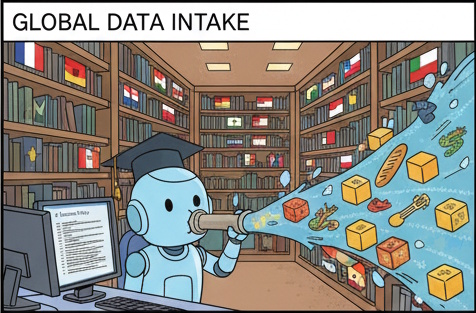
AI for Language Learning offers:
Personalized practice: AI apps track your errors and adapt lessons to your strengths and weaknesses, so you get more exercises on the vocabulary and grammar you struggle with instead of one-size-fits-all drills.
Instant feedback: Many tools give real-time corrections on grammar, vocabulary, and pronunciation, highlighting mistakes and suggesting better phrases immediately, something textbooks and most prerecorded courses can't do.
Conversation partners: AI chatbots simulate real-life dialogue so you can speak or type without fear of judgment; apps like Langua, TalkPal, and others are built specifically for open-ended conversation practice with feedback and summaries afterwards.
Accessibility: AI-powered language learning applications and platforms remain accessible round-the-clock, affording learners the opportunity to practice at their convenience, anytime, and anywhere.
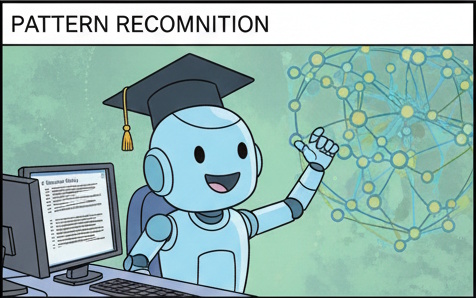
AI is Effective for learning a language
🗣️ You get unlimited conversation practice
One of the hardest parts of learning a language is finding someone to practice with, especially someone patient. AI solves that instantly. You can practice conversations at any level, from beginner greetings to advanced debates, and the AI adapts to your pace, vocabulary, and mistakes. It never gets tired, never judges, and always responds in the target language.
📚 AI explains grammar in simple, personalized ways
Instead of memorizing rules from a textbook, you can ask:
- "Explain this grammar like I'm 10."
- "Give me examples using food vocabulary."
- "Why is this verb conjugated this way?"
AI tailors explanations to your learning style, which makes grammar far less intimidating.
🧩 Instant feedback on writing and speaking
AI can correct your sentences, explain your mistakes, offer better phrasing, help you sound more natural, and adjust tone (formal, casual, polite, etc.). This is something even many human tutors don't do consistently.
🎧 Listening and pronunciation help
You can practice listening comprehension, dictation, pronunciation drills, accent reduction, shadowing exercises, and more. AI can repeat phrases slowly, break them into syllables, or give phonetic hints.
🎮 You can turn learning into games
AI can create quizzes, flashcards, role-playing scenarios, mystery stories where you must respond in the language, vocabulary challenges, and more. It keeps things engaging so you don't burn out.
✈️ You can learn for real-world situations
Tell the AI what you need:
- "Teach me Spanish for travel."
- "Help me learn French for business meetings."
- "I need Japanese for ordering food."
It will build lessons around your goals instead of a generic curriculum.
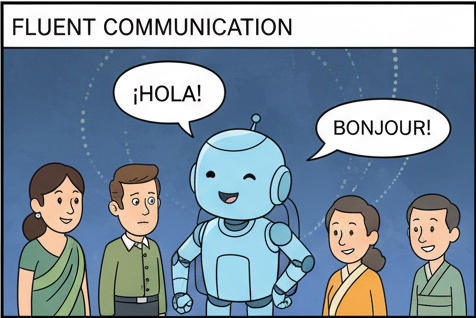
 AI language learning tools
General apps with AI features:
Duolingo adds AI modes like "Explain My Answer," AI roleplays, and even video calls with in-app characters to practice speaking.
Babbel, Memrise, Mondly, and Rosetta Stone use AI to personalize lesson order, reinforce weak areas, and improve pronunciation drills.
Conversation-focused AI tutors:
Langua and TalkPal offer continuous speaking practice with human-like voices, real-time corrections, post-chat vocab lists, and grammar notes, aiming to build confidence and fluency.
Hybrids like Chatterbug mix AI exercises with live human tutors, using AI to prepare you before sessions and consolidate what you learned afterwards.
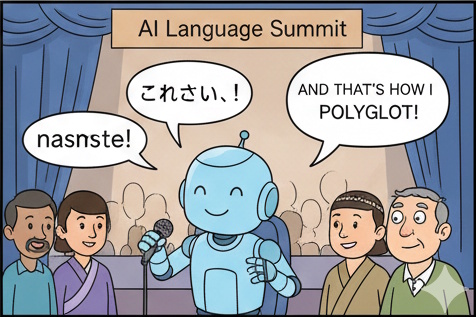
Benefits and Limits
 Benefits
AI has transformed language learning by making it more accessible,
personalized, and interactive than traditional methods. One of the biggest
advantages is the ability to practice conversation anytime, without needing
a human partner. AI adapts to your level, responds instantly, and never gets
impatient, which makes it ideal for building confidence and fluency. It can
also explain grammar in simple, tailored ways, adjusting explanations to
your learning style, something textbooks and many apps struggle to do.
Because AI can generate unlimited examples, exercises, and scenarios,
learners can immerse themselves in real-world situations like travel,
business, or casual conversation with remarkable flexibility.
Another
major benefit is the quality of feedback. AI can correct your writing,
suggest more natural phrasing, and help you refine tone - formal, casual,
polite, or regional - within seconds. This kind of immediate, detailed
feedback is difficult to get consistently from human tutors. AI also
supports listening and pronunciation practice by repeating phrases, slowing
down speech, or breaking words into syllables. And because AI can gamify
learning with quizzes, stories, and role-playing, it keeps motivation high
and reduces the boredom that often derails long-term study.
- More practice time, especially speaking, without scheduling a partner or teacher.
- Lower anxiety for shy learners and flexible, 24/7 access from phone or laptop.
- Rich, immersive practice with audio, video, quizzes, and interactive stories.
 Limits
Despite its strengths, AI is not a complete replacement for human
interaction or structured instruction. AI models can sometimes generate
incorrect explanations or oversimplify complex grammar, which means learners
still need occasional verification from reliable sources. While AI can
simulate conversation, it cannot fully replicate the unpredictability,
emotion, and cultural nuance of speaking with real people. Subtle elements
like humor, sarcasm, body language, and social context are areas where human
interaction remains essential.
AI also lacks the ability to track
long-term learning goals with the depth and intentionality of a trained
teacher. It can guide practice, but it doesn't always know when to push you,
when to slow down, or how to design a full curriculum without your
direction. Cultural understanding - an important part of language mastery -
is another limitation. AI can describe cultural norms, but it cannot replace
lived experience or immersion in real communities. Finally, because AI
relies on patterns in data, it may reinforce common phrases while missing
regional variations, slang, or emerging language trends unless specifically
prompted.
 Sample Lesson Plan for Learning Spanish with a Chatbot (Beginner Level)
Here's a sample lesson plan for learning Spanish with a chatbot. It's designed to feel like something you could use as a daily routine. The goal of the lesson is to build foundational Spanish skills by practicing greetings, basic vocabulary, simple sentences, and conversational confidence through interactive chatbot dialogue. What's nice about the chatbot is you can proceed at your own pace and don't have to worry about making mistakes. Chatbots don't giggle or judge!
⏱️ Total Time: 30-40 minutes
Warm-Up (5 minutes)
Objective: Activate prior knowledge and ease into Spanish mode.
Activity: Ask the chatbot: "Let's warm up. Give me five simple
Spanish words and ask me to translate them." Translate each word. The
chatbot corrects mistakes and provides short example sentences.
Guided Dialogue Practice (10 minutes)
Objective: Practice real conversation with structured support.
Activity: Tell the chatbot: "Let's role-play a simple conversation.
You are a friendly person I meet for the first time. Keep your sentences
short." Practice greetings, introductions, and basic questions: What is your
name? Where do you live? How are you? The chatbot adapts to your level and
offers corrections in real time.
Vocabulary Expansion (5-7 minutes)
Objective: Learn new words in a meaningful context.
Activity: Ask the chatbot: "Teach me 10 beginner Spanish words related
to daily life. Include gender, plural forms, and example sentences." Repeat
each word aloud. Ask the chatbot to quiz you on them.
Grammar Mini-Lesson (5 minutes)
Objective: Understand one small grammar concept clearly.
Activity: Choose one topic per day, such as: Articles (el, la, los,
las). Ser vs. estar. Regular -ar verb conjugation. Basic sentence structure
Ask the chatbot: "Explain this grammar point simply, give me
three examples, and then ask me to create three sentences." The chatbot
corrects your sentences and explains why.
Pronunciation Practice (5 minutes)
Objective: Improve clarity and listening comprehension.
Activity: Ask the chatbot: "Give me five short sentences to practice
pronunciation. Provide phonetic hints if needed." Read each sentence aloud.
The chatbot gives feedback on stress patterns, vowel sounds, or tricky
consonants.
Wrap-Up & Reflection (3 minutes)
Objective: Reinforce learning and set goals.
Activity:
Ask the chatbot: "Summarize what I learned today." "Give me one small
homework task for tomorrow." Examples of homework: Learn 5 new verbs. Write
a short self-introduction. Practice numbers 1-50.
🧭 Optional Add-Ons
Cultural note: Ask the chatbot for a short fact about
Spanish-speaking cultures.
Story mode: Have the chatbot
generate a 5-sentence story using today's vocabulary.
Difficulty
adjustment: Tell the chatbot to increase or decrease complexity
next time.
For a different objective, AI can also create:
- a multi-week
curriculum
- a travel-focused Spanish plan
- a business Spanish plan
- a version tailored for an educational website
 Learning Spanish with Duolingo
It all started innocently enough. January 2026. New Year's resolution time. I decided to finally learn Spanish. My reasoning: tacos taste better when you can order them without pointing. Also, I wanted to understand Bad Bunny lyrics without Google Translate mangling them into poetry about sad refrigerators.
I started with Duolingo.

Day 1: Duolingo welcomes me with a cheerful green owl named Duo. "¡Hola! I'm here to help you learn Spanish!" Lesson 1: "El hombre come la manzana." (The man eats the apple.) Easy. I'm a natural.
Day 3: I'm on a 3-day streak. Feeling cocky. Lesson: "La mujer toma agua." (The woman drinks water.) I nail it. Duo gives me a little crown. I feel seen.
Day 7: Things get weird. Duolingo introduces sentences like: "El gato lleva pantalones." (The cat wears pants.) Okay, fashion-forward cat. I roll with it.
Day 14: The sentences escalate. "El oso baila con la tortuga." (The bear dances with the turtle.) I picture a disco in the forest. Fine. Whatever keeps me motivated.
Day 21: I miss one day because I have a life. At 2 a.m., my phone buzzes with a notification: Duo's face, but now his eyes are glowing red. "You've broken your streak. Practice now or regret it." I ignore it. I'm an adult. I have boundaries.
Day 22: Another notification. "I know where you live." Attached: a photo of my apartment building. Okay, it was just a generic stock photo, but still creepy. I panic-practice at 3 a.m.
Day 30: The sentences have gone full surreal. "Mi abuela es un vampiro." (My grandmother is a vampire.) "El doctor come zapatos." (The doctor eats shoes.) "La niña tiene un elefante en la cocina." (The girl has an elephant in the kitchen.) I message my Spanish-speaking friend: "Is this normal Spanish?" She replies: "Bro, Duolingo is teaching you how to survive a fever dream, not order coffee."
Day 45: I reach a new unit: Flirting. First phrase: "Eres muy guapo." (You are very handsome.) I practice saying it in the mirror. Feel suave. Second phrase: "¿Quieres ser mi novia?" (Do you want to be my girlfriend?) I accidentally say this to the barista at Starbucks. She laughs. I get her number. Duolingo works!
Day 60: The owl has me in a chokehold. I'm at a family dinner. My phone buzzes. I excuse myself to the bathroom to do a quick lesson because I will not break my streak again. My mom knocks: "Everything okay in there?" Me: "Sí, mamá, estoy practicando español." (Leave me alone, I'm practicing Spanish!) Sorry, I added the "leave me alone" part.
Day 90: I visit Mexico. I confidently walk into a restaurant and declare: "¡El oso baila con la tortuga y mi abuela es un vampiro!" The waiter stares. My friend translates: "You just said the bear dances with the turtle and my grandmother is a vampire." Dead silence. Then the entire restaurant bursts out laughing. The waiter brings free guacamole "for the vampire grandma."
Moral of the story: I still don't speak perfect Spanish. But I can survive a surrealist novel, flirt accidentally, and I'm terrified of owls.
Duolingo streak: 360 days and counting. Send help. Or tacos.
 Links
Links
Humorous Guides to Surviving AI (3 book series) from AI World includes AI is Just an App, Our House has a Brain, and AI is Coming for Your Job. LOL stories and teachings about artifiical intelligence.
AI humor page.
AI stories page.
External links open in a new tab:
Reviews:
- princetonreview.com/ai-education/language-learning-with-ai
- idiomaconsulting.com/idioma-news/how-ai-is-revolutionizing-language-learning
- digitalocean.com/resources/articles/smart-ai-language-learning-apps
- tomstakesaitools.substack.com/p/ai-powered-language-speaking-practice
- sanako.com/what-are-the-best-ai-tools-for-language-teachers-in-2025
- languatalk.com/blog/whats-the-best-ai-for-language-learning/
- lingtuitive.com/blog/langua-ai-tutor-review
- copycatcafe.com/blog/ai-language-learning-apps
- reddit.com/r/languagelearning/comments/1k9xf5x/explosion_in_language_ai_tutors_are_they_helpful
- pcmag.com/picks/the-best-language-learning-software
- youtube.com/watch?v=APbJfERnzo8
Language learning software tools:
- memrise.com
- talkpal.ai
- rosettastone.com
- mondly.com/faq/key-features-of-Mondly
- babbel.com
- duolingo.com/
- chatterbug.com