 AI
in Schools
AI
in Schools
Transforming educational practices, enhancing learning, streamlining admin tasks
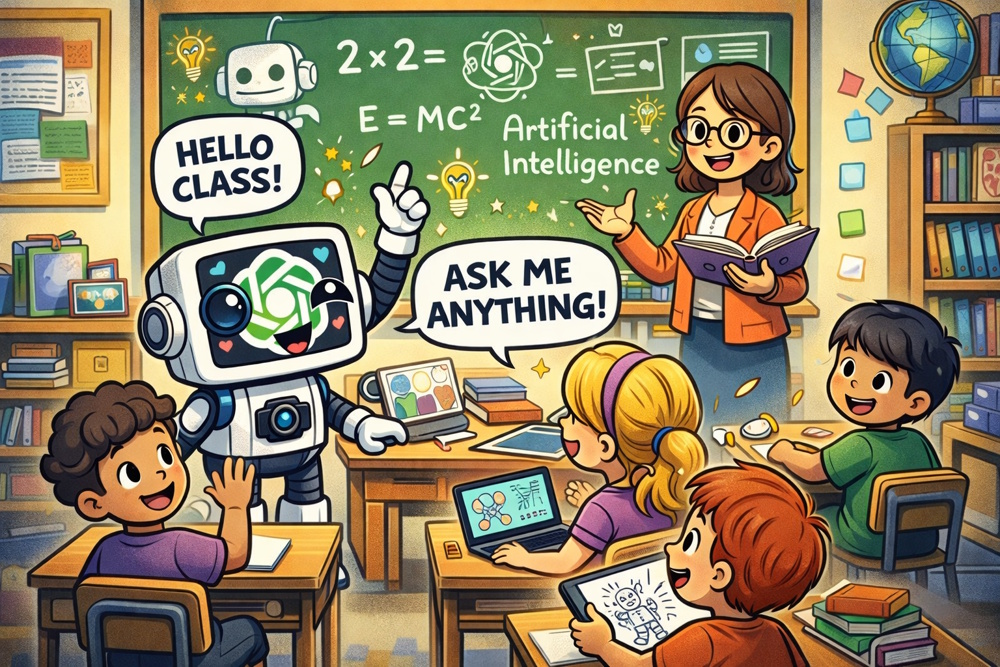
AI is set to revolutionize education by providing personalized learning experiences, automating administrative tasks, and offering valuable insights into student performance. However, addressing the challenges associated with equity, bias, and privacy will be critical as schools integrate these technologies into their systems.
The future of education will likely see a collaborative approach where AI complements traditional teaching methods, enhancing the overall learning experience for students.
 New Initiatives
OpenAI's Education for Countries is a new pillar of their OpenAI for Countries initiative. They work with governments and university consortia to bring AI into education systems to personalize learning, reduce administrative burden, and prepare students for the workforce.
Microsoft has announced Elevate for Educators, a program connecting educators with community, professional development, and AI tools to transform teaching.
Google has AI tools for learning to support educators and make learning more effective, efficient and engaging.
Anthropic is partnering with Teach For All to bring AI tools and training to educators in 63 countries. Through the AI Literacy & Creator Collective (LCC), more than 100,000 teachers and alumni across Teach For All's network, serving more than 1.5 million students, will have the opportunity to develop AI fluency and adapt Claude to serve real classroom needs.
 How AI is Used in Education
Personalized Learning
AI tailors educational content to meet individual student needs. Platforms like DreamBox and Smart Sparrow adapt lessons based on realtime analysis of student performance, allowing for customized learning paths that cater to different learning styles and paces.
Automate Administrative Tasks
AI helps automate grading, scheduling, and report generation. Tools like Gradescope provide consistent grading for assignments, significantly reducing the workload on educators and allowing them to focus more on teaching.
Intelligent Tutoring Systems
AI powered tutoring systems offer personalized feedback and support to students. These systems adapt to individual learning styles, helping students grasp complex concepts more effectively.
Data Analytics
AI analyzes data from various educational sources, such as online learning platforms and classroom attendance records. This data helps educators identify trends and tailor instruction to address gaps in understanding.
Assistive Technology
AI tools like speech recognition software assist students with disabilities by transcribing spoken words into text, enabling greater participation in classroom activities.
Chatbots and Virtual Assistants
AI driven chatbots provide students with immediate support outside classroom hours, answering questions and guiding them through administrative processes.
Curriculum Planning
AI assists educators in planning curricula by analyzing educational data to identify trends and suggest updates based on the latest standards.
Gamification of Learning
AI enhances educational games by creating adaptive learning experiences that engage students actively while promoting understanding of complex subjects.
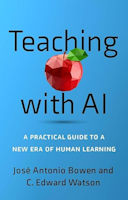 |
Teaching with AI: A Practical Guide to a New Era of Human Learning In this groundbreaking and practical guide, teachers will discover how to harness and manage AI as a powerful teaching tool. Jose Antonio Bowen and C. Edward Watson present emerging and powerful research on the seismic changes AI is already creating in schools and the workplace, providing invaluable insights into what AI can accomplish in the classroom and beyond. |
 Benefits of AI in Education
- Enhanced Engagement: Personalized learning experiences keep students engaged and motivated.
- Efficiency: Automating routine tasks allows teachers to allocate more time to direct student interactions.
- Accessibility: AI tools can help bridge gaps for students with disabilities or those requiring additional support.
- Data Driven Insights: Educators can make informed decisions based on realtime data analytics regarding student performance.
 Challenges of AI in Education
AI is reshaping education by offering personalized learning, automated grading, and data-driven insights, although these benefits come with significant challenges that schools must confront.
One of the most pressing issues is student data privacy. AI systems often rely on large amounts of sensitive information, including academic records, behavioral patterns, and sometimes even biometric data. This raises serious concerns about hacking, misuse, and identity theft, especially as AI tools become more deeply embedded in classrooms. In higher-education, universities are struggling to balance innovation with strong data governance as AI tools increasingly touch student information across learning management systems, surveillance systems, and research platforms.
Another major challenge is bias, fairness, and transparency. AI models learn from historical data, which may contain inequities that disproportionately affect certain student groups. If not carefully monitored, AI-driven recommendations, grading tools, or analytics systems can reinforce existing disparities. Fairness and transparency must guide AI adoption to protect students and maintain trust in educational institutions. This challenge is amplified by the fact that many AI systems operate as "black boxes," making it difficult for educators to understand how decisions are made or to challenge incorrect outputs.
Schools also face the risk of over-reliance on AI, which can weaken critical thinking and reduce human judgment in the learning process. AI works best as a classroom assistant, not a replacement for teachers. When students depend too heavily on AI for writing, problem-solving, or feedback, they may lose opportunities to develop essential skills. An unbalanced use of AI can undermine equity and student agency, especially if AI tools become the default method for learning rather than a supplement.
The digital divide remains another significant barrier. AI's benefits depend on access to devices, connectivity, and digital literacy. These resources are unevenly distributed across schools and communities. Without strong leadership and investment, AI could widen existing gaps between well-resourced and under-resourced districts. This divide affects not only students but also teachers, who need training and support to use AI tools effectively.
AI introduces ethical and regulatory challenges. A systematic review published in *Frontiers in Education* shows that generative AI raises complex questions about academic integrity, authorship, misinformation, and the boundaries of acceptable use. Schools must develop clear policies to address plagiarism, responsible use, and the role of AI in assessments. At the same time, educators must navigate the tension between encouraging innovation and maintaining academic standards.
Together, these challenges show that AI in education is not just a technical issue. It's alsos a human, ethical, and institutional one. Addressing privacy, fairness, access, transparency, and governance will determine whether AI strengthens learning or creates new risks for students and educators.
- Equity and Access: There are concerns about ensuring equitable access to AI tools across different demographics, particularly in underserved communities.
- Bias in AI Systems: The potential for algorithmic bias raises ethical concerns about fairness in assessments and treatment of students.
- Teacher Roles: While AI can augment teaching, there are concerns about its impact on the role of educators. AI should enhance rather than replace human interaction in the classroom. Teachers are crucial for providing emotional support, human interaction, and nuanced guidance essential for effective learning.
- Privacy Concerns: The use of AI involves collecting significant amounts of data, which raises issues regarding student privacy and data security.
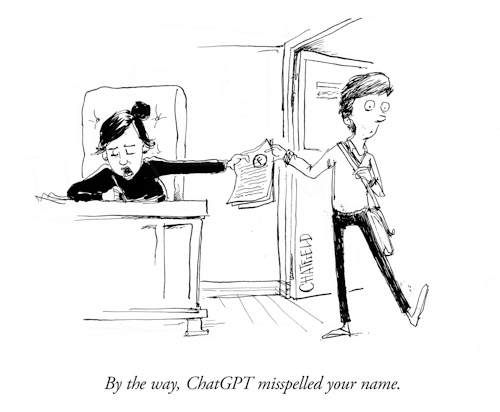
- Cheating: Students can use ChatGPT to write entire essays, answer quiz questions, or do their homework. There are AI programs that can detect AI writing to help teachers determine if their students are cheating, although sometimes those programs may falsely identify a student's original work as plagiarism.
 Future Implications
The future of AI in schools is moving far beyond today's chatbots and tutoring apps. Over the next decade, AI is expected to become part of the core infrastructure of education, quietly running systems behind the scenes while reshaping how students learn and how teachers work. AI will increasingly operate at the system level; managing data, supporting instruction, and helping schools personalize learning at scale. Instead of being an add-on tool, AI will become woven into scheduling, assessment, curriculum planning, and student-support systems.
One of the biggest shifts will be the rise of personalized learning. AI-driven platforms can already analyze student performance and adapt lessons in real time, and this capability will expand dramatically. In K-12 settings, AI will tailor instruction to each student's pace, strengths, and challenges, helping prevent students from falling behind or becoming disengaged. AI can identify patterns in student work, predict areas of difficulty, and recommend targeted interventions that can turn personalized learning from an ideal into a daily classroom reality.
AI will also change the skills students need. Future-ready learners will need to understand not just how to use AI, but how to evaluate it. This involves developing judgment, verification skills, and the ability to decide when not to rely on AI. Sudents must learn to question outputs, check accuracy, and understand the limits of automated systems. This shift mirrors the rise of digital literacy in the early 2000s, but with far higher stakes.
Teachers will not be replaced, but their roles will evolve. AI will automate administrative tasks, generate lesson materials, grade papers, and provide real-time insights into student progress. The real transformation will depend on leadership where schools and governments guide policy, training, and capacity-building to ensure AI strengthens the human side of education. Teachers will shift toward roles that emphasize mentorship, creativity, and human connection.
Looking further ahead, AI could reshape the very structure of schooling. In the future, AI may make most cognitive aspects of mind optional for humans which will fundamentally alter how students learn and what schools teach. This means students will focus more on creativity, ethics, collaboration, and problem-solving, while AI handles routine cognitive tasks.
The future of AI in schools is not about replacing teachers or automating learning. It's about building AI-enhanced learning ecosystems where personalized instruction, data-driven insights, and new forms of digital literacy prepare students for a world where AI is everywhere. The transformation will be steady, deep, and long-lasting, and the schools that adapt early will shape the next generation of American education.
As AI technology continues to evolve, its role in education is expected to expand further. Key areas for development include:
- AI Literacy: Educating students about AI technologies will be crucial for preparing them for future job markets.
- Continuous Improvement: Ongoing research will be necessary to refine AI tools and ensure they meet educational needs effectively.
- Policy Development: Establishing guidelines and ethical frameworks will be essential to navigate the challenges presented by AI in education.
 Links
Links
AI in America chapter on Schools has a deeper dive into education and AI.
Our House Has a Brain book on Amazon has a section on Schools and Homework.
External links open in a new tab:
Guide to Evaluating AI-Generated Content
More resources:
- onlinedegrees.sandiego.edu/artificial-intelligence-education/
- weforum.org/stories/future-learning-ai-revolutionizing-education
- gatesfoundation.org/ideas/articles/ai-tools-education-technology
- ed.gov/sites/ed/files/documents/ai-report/ai-report.pdf
- waldenu.edu/programs/education/resource/five-pros-and-cons-of-ai-in-the-education-sector
- ai-in-education.co.uk
- edu.google.com/why-google/ai-for-education/
- neurosys.com/blog/personalized-learning-how-generative-ai-is-revolutionizing-education