 Tilly
Norwood
Tilly
Norwood
AI Learns to Act
Tilly Norwood is an AI-generated "actress" created in 2025 by Particle6, a British company. She immediately became a flashpoint in Hollywood's debate over synthetic performers, individual rights, and the future of acting.
Tilly Norwood is not a human actor; instead, she's a photorealistic character developed using generative AI by Xicoia, the AI division of the production company Particle6 Group, founded by Eline Van der Velden, a Dutch actress and producer. Tilly was introduced as "the first AI actress." Her creators have openly talked about their ambitions to make Tilly the Scarlett Johansson or Natalie Portman of the AI age. Talent agencies have taken notice and are reportedly exploring representing her.
Tilly Norwood is important both as an individual AI actress and as a test case for how far the industry, audiences, and regulators are willing to go in accepting synthetic performers. The use of Tilly as a performer raises questions regarding what protections and norms are needed to preserve human creativity and protect individual rights in the Age of AI.
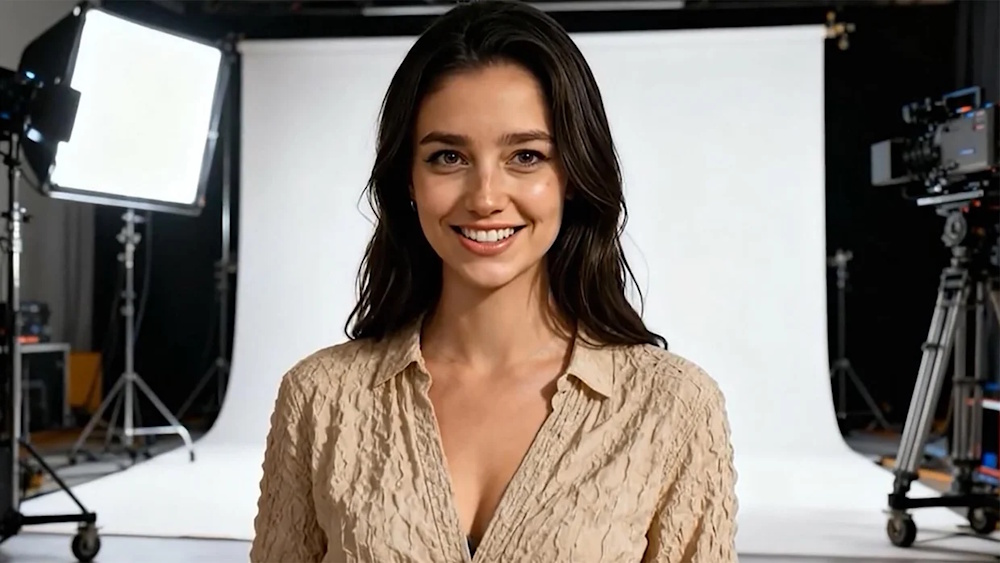
An actress who never ages, never walks off set or demands a higher salary
 Projects and Public Debut
Tilly's first major appearance was in AI Commissioner, a project that drew mixed to negative critical reactions from outlets such as The Guardian, PC Gamer, and The A.V. Club.
Media coverage on networks like ABC and CBS highlighted her as a new kind of Hollywood "star," able to work endlessly, never age, and be restyled at will, raising questions about what it means to be an actor in an AI era.
AI performers like Tilly operate within trained data. Instead of using any emotion, they simulate based on pattern inputs and model maps to produce facial expressions. To many in the industry, the use of AI represents a shift in how the craft of acting is defined.
 Backlash from Actors and Unions
High‑profile actors including Emily Blunt, Whoopi Goldberg, and Simu Liu have called out Tilly, warning that AI actors could erode human connection and undercut performers' livelihoods.
Emily Blunt called the creation of Tilly "terrifying" in a September interview with Variety and urged agencies to "please stop taking away our human connection." Actors like Whoopi Goldberg and Simu Liu also expressed concern over Tilly with Goldberg saying on The View that AI-generated actors have an "unfair advantage" over human actors.
Actresses Melissa Barrera, Kiersey Clemons, and Natasha Lyonne suggested boycotting any agency who signed Norwood, while Mara Wilson asked why none of the "hundreds of living young women whose faces were composited together" to create Norwood could be hired instead,
The SAG‑AFTRA labor union has argued that Tilly is fundamentally "a character generated by a computer program" trained on the work of many professionals without their consent or compensation, calling it an example of using "stolen performances" and devaluing human artistry.
Eline Van der Velden, CEO of Particle6, revealed that her company is taking AI implementation even further. "We're starting to generate short films completely using AI, everything from synthetic humans. We're talking drama series completely in AI," she said, adding that production costs are being reduced by up to 90 percent compared to traditional methods.
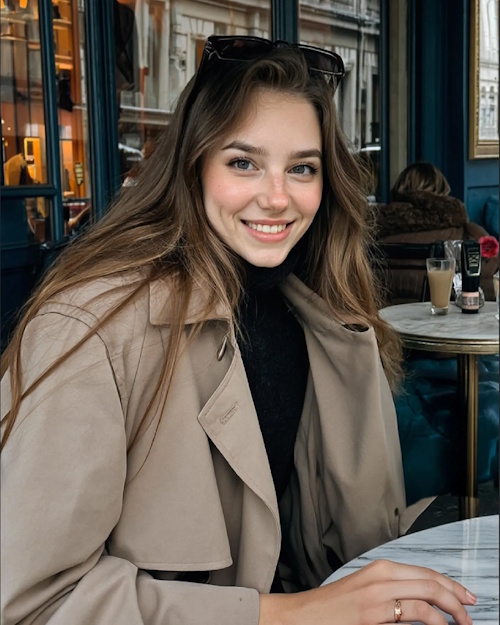
 Creator's Defense and Ethical Framing
Eline Van der Velden says Tilly is not intended to replace human actors, but to expand the industry by lowering some production costs and enabling projects that otherwise couldn't get financed.
Eline frames Tilly as part of a new "AI genre" and a creative tool. She compares the audience connection with Tilly to how viewers already bond with animated or computer-generated characters from companies like Pixar. She claims audiences are more interested in a film's story than whether its actors are real or generated. Eline argues that creatives - not pure tech companies - should set the guidelines and ethics around the use of AI software tools and the creative process.
I think it's very important for the creative industries to take this tech and control it. I'm part of the creative industry, so I want us to be in control of the guidelines and the ethics around this and it not to be imposed by the tech industry.
 And
the Oscar goes to...Tilly Norwood!
And
the Oscar goes to...Tilly Norwood!
"I can't deny that you like me, right now, you like me!"
 Cultural and Ethical Significance
Commentators see Tilly as a symbol of broader shifts in digital culture: the rise of synthetic celebrities, the "uncanny valley" discomfort of near‑human AI faces, and growing worries about ownership, rights, and power in an AI‑driven media ecosystem.
Scholars and critics note that the use of Tilly spotlights existing inequalities in the creative industries. While top‑tier stars worry about losing roles, many lesser‑known actors already face precarious careers. AI tools like Tilly could either further concentrate power or, if governed well, help open doors for sidelined creators.
Critics raise questions such as: Who owns an AI performer? Who represents their interests? What contractual frameworks apply? Who governs this new category of synthetic talent? These are key governance issues that entertainment, healthcare, and every other industry using AI to simulate human expertise will soon confront.
 Links
Links
Miss AI is the world's first beauty contest for AI creations.
AI in Entertainment page.
Governance index page.
External links open in a new tab.
- instagram.com/tillynorwood Hi, I'm Tilly Norwood - the first AI actress. Or, as some like to call me, 'the end of civilisation.' Honestly, god forbid a girl has hobbies, right?
- en.wikipedia.org/wiki/Tilly_Norwood
- abcnews.go.com/GMA/Culture/tilly-norwood-creator-responds-fears-over-AI-actors/story
- theconversation.com/what-ai-generated-tilly-norwood-reveals-about-digital-culture-ethics-and-the-responsibilities-of-creators
- youtube.com/watch?v=4KXTqSxUFO0 from CBS News
- cbsnews.com/news/theres-a-new-face-in-hollywood-generated-by-ai
- news.darden.virginia.edu/ai-actor-tilly-norwood-isnt-real-but-could-present-real-problems-for-hollywood
- wsj.com/arts-culture/film/tilly-norwood-ai-actress-particle6
- cssh.northeastern.edu/ai-actress-tilly-norwood-has-created-a-hollywood-firestorm-could-she-spell-doom-for-acting
- carey.jhu.edu/articles/tilly-norwood-problem-when-ai-innovation-turns-abdication